When refering to evidence in academic writing, you should always try to reference the primary (original) source. That is usually the journal article where the information was first stated. In most cases Physiopedia articles are a secondary source and so should not be used as references. Physiopedia articles are best used to find the original sources of information (see the references list at the bottom of the article).
If you believe that this Physiopedia article is the primary source for the information you are refering to, you can use the button below to access a related citation statement.
Excitotoxicity: neuronal overstimulation by glutamate
Glutamate is the most abundant excitatory neurotransmitter used in the brain and spinal cord. It is also the primary mediator of nervous system plasticity[1]. Glutamate needs to be present at the right concentrations in the right places at the right time. Too much glutamate in the brain, in the wrong place, in too high of a concentration and for too long can cause brain cell damage or death.
Researchers agree that glutamate excitotoxicity undoubtedly has a role in the pathogenesis of Alzheimer disease, the most common neurodegenerative pathology affecting the elderly population. Research suggests glutamate excitotoxicity accelerates the progression of Alzheimer disease. Glutamate is also implicated in the pathogenesis of Parkinson disease[1].
It has become a pharmacologic target in many areas of disease research.[3]
Function
Glutamate is the principal excitatory neurotransmitter of the central nervous system and the most abundant neurotransmitter in the brain. It is stored within vesicles in axon terminals and released via exocytosis upon the influx of calcium cations. It acts on both ionotropic and metabotropic receptors, including NMDA, AMPA, kainite, and G protein-linked receptors located on neurons and glial cells. The rate of its uptake from extracellular fluid largely regulates its concentration and actions in various compartments. Glutamate has clinical relevance in neurology and psychiatry, eg depression, substance use disorder, schizophrenia, neurodegenerative diseases, and other cognitive function and mood deficits.[3]
Glutamate is a major constituent of a wide variety of proteins which makes it one of the most abundant amino acids in the human body. It also serves as a metabolic precursor for the neurotransmitter GABA, the main inhibitory neurotransmitter[4].
Clinical Significance
Excitotoxicity is a complex process triggered by glutamate receptor activation that results in the degeneration of dendrites and cell death.[5] You can think of glutamate as a stimulant, and anyone who’s had too much coffee can tell you, too much of a stimulant is not a good thing. Excitotoxicity-induced glial injury can mediate neurodegeneration, leaving the brain more susceptible to aberrant glutamate cycling, and contributing to diseases affecting both neurons (e.g., dementia) and glia (e.g., multiple sclerosis),[3]
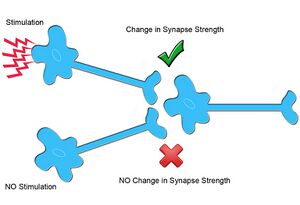
Homosynaptic plasticity Glutamate’s role in synaptic plasticity has broad clinical implications, eg in learning and functional disabilities, neurodegenerative diseases, and addictive behaviors. Glutamate plays a prominent role in neural circuits involved with synaptic plasticity, the ability for strengthening or weakening of signaling between neurons over time to shape learning and memory. It’s a major player in the subset of plasticity called long-term potentiation. Glutamate signaling is critical in brain regions, including the cortex and hippocampus, which are fundamental for cognitive function. Glutamate receptors are widely expressed throughout the CNS, not only in neurons, but also in glial cells.[6][3].