When refering to evidence in academic writing, you should always try to reference the primary (original) source. That is usually the journal article where the information was first stated. In most cases Physiopedia articles are a secondary source and so should not be used as references. Physiopedia articles are best used to find the original sources of information (see the references list at the bottom of the article).
If you believe that this Physiopedia article is the primary source for the information you are refering to, you can use the button below to access a related citation statement.
Encephalitis is an inflammation of the brain, usually caused by a viral infection. Although rare, it is potentially life-threatening, and may lead to permanent brain damage or death[1].
Image: Coronal T2-weighted MR image shows high signal in the temporal lobes including hippocampal formations and parahippogampal gyrae, insulae, and right inferior frontal gyrus. The right gyrus rectus and the columns of the fornices were also involved (not shown). There was moderate mass-effect due to viral encephalitis (herpes simplex virus)
The etiology of many cases of encephalitis remains unknown despite extensive workup. Viruses are the most prevalent identified cause, accounting for about 70% of confirmed cases of encephalitis[2].
The prognosis for a person with encephalitis varies according to the age of the patient – with the very young and very old particularly at risk – and the particular virus that caused the disease.
When encephalitis occur with meningitis, it is called meningoencephalitis. It is caused either as a direct infection or a sequela of a pre-existing condition. [3]
Causes
Encephalitis is caused by any of the following factors; [4]
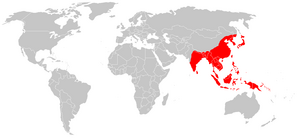
Viral infection (incidence of viral encephalitis is 3.5 to 7.5 per 100,000 people, with the highest incidence in the young and elderly). The epidemiology of certain viral causes of encephalitis has changed through time. Eg vaccination has led to a decrease in the incidence of encephalitis due to mumps and measles whilst Epstein-Barr virus and cytomegalovirus encephalitis are seen more frequently now because of the rise in immunocompromised individuals eg AIDS, transplant, and chemotherapy patients. In the United States, the most common causes of viral encephalitis are herpes simplex virus (HSV), West Nile virus, and the enteroviruses. Other viral etiologic agents include varicella-zoster virus, Epstein-Barr virus (EBV), cytomegalovirus (CMV), human herpesvirus type 6 and 7, measles virus, mumps virus, rubella virus, St. Louis virus, eastern equine virus, western equine virus, dengue virus, and rabies virus. The transmission to the brain is via hematogeneous spread.[2][5] Outside the United States, Japanese encephalitis is one of the most common causes of encephalitis worldwide (see image for region affected). It is widespread in Asia and is transmitted by a mosquito. A vaccine is available.[6]
COVID 19 can be a devastating disease, which is having a profound effect on people and societies worldwide. It is a rapidly changing landscape, yet there are increasing reports of neurological and neuropsychiatric complications of COVID-19. There are growing questions about possible neuro-cognitive sequelae and the longer term rehabilitation needs of survivors of the acute phase of the illness. At this stage in the pandemic, questions remain and our understanding of the disease is rapidly evolving. There have been a few case reports of COVID-19 giving rise to Encephalitis[7] and tjis is expected to rise.
Bacterial infection can result in encephalitis especially in immuno-compromised individuals, e.g mycoplasma, Lyme disease, Bartonella henselae, malaria.
Autoimmune encephalitis refers to a group of conditions that occur when the body's immune system mistakenly attacks healthy brain cells, leading to inflammation of the brain. People with autoimmune encephalitis may have various neurologic and/or psychiatric symptoms.[8] Some cases of encephalitis caused by an autoimmune disorder may be triggered by an infection (“post infectious”) or by a cancer – even one that is microscopic and cannot be found (so-called paraneoplastic neurological syndromes). NMDA-Receptor encephalitis is a type of autoantibody-mediated encephalitis and is being increasingly recognized; it was the most documented form of non-bacterial meningitis reported in the long-term study and follow-up of participants in the California Encephalitis project. Treatment involves immunosuppression and/or tumor removal if such a cause is found[6].
Some types are of unknown aetiology - up to 60 percent of cases remain undiagnosed. Several thousand cases of encephalitis are reported each year, but many more may occur since the symptoms may be mild to non-existent in most individuals.[6]
Clinical Presentation
An adult infected with the disease typically present with; [9]
Treatment for mild encephalitis usually consists of:
Bed rest
Plenty of fluids
Anti-inflammatory drugs — such as acetaminophen (Tylenol, others), ibuprofen (Advil, Motrin IB, others) and naproxen sodium (Aleve) — to relieve headaches and fevers
Antiviral drugs. Encephalitis caused by certain viruses usually requires antiviral treatment.
Supportive care. People who are hospitalized with severe encephalitis might need:
Breathing assistance, as well as careful monitoring of breathing and heart function
Intravenous fluids to ensure proper hydration and levels of essential minerals
Anti-inflammatory drugs, such as corticosteroids, to reduce swelling and pressure within the skull
Anticonvulsant medications, such as phenytoin (Dilantin), to stop or prevent seizures[11]
Rehabilitation
Good rehabilitation is a holistic approach. It recognises the complex cognitive, behavioural, social, emotional and medical problems faced by people affected by encephalitis and their families. Complications of encephalitis may require the following services
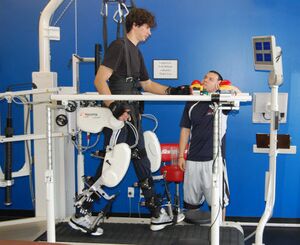
Physical therapy to improve strength, flexibility, balance, motor coordination and mobility eg Exercise therapy; Gait rehabilitation; Otago Balance training
Occupational therapy to develop everyday skills and to use adaptive products that help with everyday activities
Speech therapy to relearn muscle control and coordination to produce speech
Psychotherapy to learn coping strategies and new behavioral skills to improve mood disorders or address personality changes[1]
↑Jmor F, Emsley HC, Fischer M. et al. The incidence of acute encephalitis syndrome in Western industrialised and tropical countries. Journal of Virology.2008; 5 (134): 134.
↑Armangue T, Petit-Pedrol M, Dalmau J. Autoimmune Encephalitis in Children. Journal of child neurology. 2012; 27 (11): 1460–1469.