
Home-Based Knee Arthroplasty Protocols and Exercise Progression
Original Editor - Stacy Schiurring
Top Contributors - Stacy Schiurring and Jess Bell
Is Home-Based Care Effective for Knee Arthroplasty Rehabilitation?
Patients can access skilled therapy following knee arthroplasty in various rehabilitation settings, including outpatient clinics, inpatient wards, and their own homes through home-based care. Each setting has advantages and disadvantages. Inpatient settings, for instance, provide the most access to skilled therapy per week. Patients in these settings also have greater access to pain medication and management options. However, some patients may prefer to be in their own homes rather than staying in a facility.
A 2019 systematic review and meta-analysis[1] compared the effectiveness of different rehabilitation settings (clinic-based, inpatient, and home-based therapy programmes) following total knee arthroplasty (TKA).[1]
Clinic vs home-based rehabilitation: clinic-based programmes showed no advantage over home-based programmes for any measured outcomes. Interestingly, home-based rehabilitation produced slightly greater improvements in mobility (approximately 25 metres more on the 6-minute walk test) at 52 weeks, though this difference falls below the clinically meaningful threshold.[1]
Inpatient vs home-based rehabilitation: inpatient rehabilitation did not deliver superior outcomes compared to home-based programmes for mobility, pain, function, quality of life, or knee flexion. However, inpatient rehabilitation was associated with higher patient satisfaction levels, though the reasons for this remain unclear.[1]
Based on low- to moderate-quality evidence, this study found that no rehabilitation setting demonstrated superior outcomes across key measures including mobility, pain, function, quality of life, and knee range of motion; and that patient choice, accessibility, cost-effectiveness, and individual circumstances may be more important factors in determining rehabilitation setting than clinical intensity.[1]
Based on the emerging evidence, home-based services offer an effective option for rehabilitation following knee arthroplasty for several compelling reasons:[1][2]
- the personalised nature of home-based care allows therapists to address real-world functional challenges within the patient's actual living environment, potentially leading to more practical and sustainable rehabilitation outcomes
- patients with a homebound status, who tend to represent a more medically complex population and are frequently excluded from traditional clinic settings, can achieve optimal functional recovery with 6-9 supervised physiotherapy visits
- home-based services eliminate transportation barriers that disproportionately affect elderly, rural, or mobility-limited patients, thereby addressing healthcare disparities while reducing the risk of nosocomial infections and the stress associated with frequent clinic visits
Knee Arthroplasty Protocols
"The success of total knee arthroplasty (TKA), as determined by patient outcome studies, is not only due to the relief of pain and restoration of function, but also to the restoration of psychosocial health. Therefore, the rehabilitative process after TKA should be designed to prepare the patient to resume ADL and sports activities."[3]
The vast majority of knee arthroplasty patients (over 85%) will recover knee function and range of motion (ROM) regardless of the postoperative rehabilitation protocol used, though success requires a multidisciplinary approach. While no consensus exists on the optimal rehabilitation protocol, research has found that the fundamental goals of treatment include (1) controlling pain, (2) providing emotional support, (3) improving ambulation, (4) maximising range of motion (ROM), and (5) developing adequate muscle strength to enable the patient to return to activities of daily living (ADLs) or sport.[3]
A 2015 systematic review[4] of postoperative rehabilitation following total knee arthroplasty reveals significant gaps in evidence-based practice guidelines. This is due to a lack of consensus on therapy protocols, including the optimal duration, intensity, and delivery methods. This review indicates that inpatient rehabilitation may not provide additional benefits to patients, but several rehabilitation modalities showed promise for improving outcomes, including: early initiation of rehabilitation; telerehabilitation in a home-based setting; clinic-based therapy; and high-intensity/high-velocity exercise programmes. Additionally, weight-bearing biofeedback, neuromuscular electrical stimulation (NMES), and balance control training appear beneficial as adjuncts to conventional rehabilitation protocols.[4] Unfortunately, the availability of some of these interventions is limited in the home-based setting. Thus, home-based rehabilitation professionals need to utilise creative and functional intervention strategies.
Knee Arthroplasty Therapeutic Exercises
Below is a list of exercises appropriate for most patients being treated in home-based care post-knee arthroplasty. As with all therapy care plans, treating rehabilitation professionals should tailor therapeutic exercises to each patient's needs and patient-centred goals.[5]
Adaptive and exercise equipment used in the home-based setting: providing treatment in a patient's home often requires rehabilitation professionals to come up with creative treatment ideas due to a lack of access to traditional rehabilitation equipment. Treating therapists can bring portable equipment, such as ankle or wrist weights, resistance bands (e.g. therabands), high-density foam balance pads, and lower extremity ergometers (also known as restorators or floor bikes), into a patient's home. Adaptive equipment, such as leg lifters, sock aids, long-handled shoe horns, and reachers, can also be useful in the home setting for both activities of daily living and exercises. For example, a leg lifter can be used as part of active assisted range of motion (AAROM) exercises; if a leg lifter is not available, a single-point cane can be used instead.
-
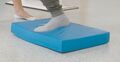 High-density foam balance pad
 -
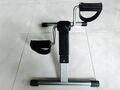 Lower extremity ergometer
 -
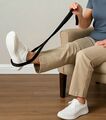 Leg lifter device
 -
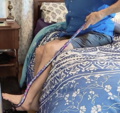 Substituting a cane for a leg lifter. Image used with permission from Robert Finch, PT.
 -
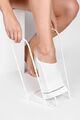 Sock aid device
 -
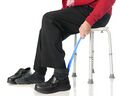 Long handled shoehorn
 -
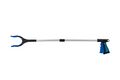 Reacher device


Supine
| Exercise | Timeframe | Progression |
|---|---|---|
| Ankle pumps | Start post-operatively (post-op) | Add resistance during plantar flexion and dorsiflexion |
| Heel slides | Start post-op | Add resistance |
| Quadriceps sets | Start post-op | Progress post-operatively:
|
| Gluteal / hamstring sets | Start post-op | |
| Hip ABDuction | Start post-op | Weeks 0-3
|
| Bridging | Weeks 0-3 |
|
| Exercise | Timeframe |
|---|---|
| Calf stretch | Start post-op |
| Hamstrings stretch | Start post-op |
| Passive gravity-assisted knee extension | Weeks 0-3 |
Prone
| Exercise | Timeframe |
|---|---|
| Hip flexor stretch | Weeks 0-3 |
| Prone knee hangs/ hamstring stretch | Weeks 0-3 |
| Planks | Weeks 6-9:
|
Seated
| Exercise | Timeframe | Progression |
|---|---|---|
| Quadriceps stretch | Start post-op (closed chain with body overpressure by scooting toward the edge of the chair) |
|
| Seated heel/toe raises | Start post-op | |
| Seated long arc quadriceps (LAQ) | Can start active assisted post-op; start active LAQ weeks 0-3 | Add resistance |
| Seated isometrics quadriceps in varying angles of flexion | Start post-op | |
| Seated hip flexion (marching) | Weeks 0-3 | Add resistance |
| Seated hip external rotation | Weeks 0-3 | Isometric to resisted |
To learn more about these exercises, please see the following optional reading pages:
- Therapeutic Exercise
- Principles of Exercise Rehabilitation
- Closed Chain Exercise
- Open Chain Exercise
- Strength Training
- Resistance Training
- Exercise and Activity in Pain Management
- The Influence of NSAIDs on Physiologic Processes and Exercise
- Muscle Function: Effects of Aging
- Delayed Onset Muscle Soreness
Transfer training can be integrated into therapeutic exercises and used as both functional training and strengthening. Transfer training progressions can focus on forward weight shifting/equal loading of the feet, and equal weight-bearing between the legs during transfer transitions and in stance.[7] Initially, the patient may need to extend their surgical leg out to decrease weight-bearing due to pain or discomfort and available range of motion, and then gradually work to bring their feet closer together with more equal weight distribution.[5]
Patients with weakness or fear of falling/movement after knee arthroplasty may benefit from initially raising their seating surface. They then gradually lower it back to its original height as their strength, range of motion, and confidence improve. Ways to raise a seating surface include adding a solid surface or firm cushions to a chair or couch, adding risers under a chair or couch, and using a toilet frame (bedside commode) or toilet seat raise (elevated toilet seat) in the bathroom.
-
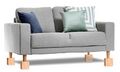 Couch with furniture risers in place
 -
 Elevating seating surface using cushions on a couch. Image used with permission from Robert Finch PT
 -
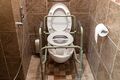 Example of a toilet frame (also known as a bedside commode)
 -
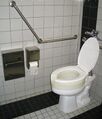 Example of a toilet seat rise (also known as an elevated toilet seat)


If you would like to learn more about transfers, please see: Principles of Transfers.
Standing
| Exercise | Timeframe | Progression |
|---|---|---|
| Standing heel/toe raises | Weeks 0-3 | |
| Terminal knee extension (TKE) | Weeks 0-3 |
|
| Mini-squats | Weeks 3-6 | Weeks 6-9
|
| Hip flexion | Weeks 0-3 |
|
| Step lunges | Weeks 0-3 |
|
| Lateral walking | Weeks 3-6 | Weeks 6-9
|
Standing balance and proprioceptive retraining exercises can be started at weeks 0-3.[7] To learn more about these exercises, please see the following optional reading pages:
- Balance
- Postural Control
- Centre of Gravity
- Balance Training
- Balance Boards
- Reactive Balance Training
- Coordination Exercises
- Training Reactive Balance and Fall Recovery Skills
Gait Training
Gait training is progressed as tolerated (e.g. changing surfaces, increasing walking distance, changing/removing assistive devices). The initial focus of gait training should be on normalising gait dynamics and equalising weight-bearing between the legs.[6] [5] Recommended timeframes for weaning from assistive devices are as follows:
- post-operatively: start with a rolling walker, walking frame or two underarm crutches
- weeks 0-3: stabilisation of gait using two underarm crutches, with a gradual transition to a single underarm crutch or cane in a controlled environment once the patient has sufficient quadriceps strength
- weeks 3-6: reinforce normal gait mechanics (e.g. equal step length, equal stance time, heel-to-toe gait pattern, gait speed) and begin ambulation without an assistive device in controlled environments
- weeks 6-9: begin agility exercises as appropriate (e.g. side-stepping, retro-walking, braiding)[7]
Patients can walk up stairs by leading with their non-surgical leg from weeks 0-3.[7] They can begin to lead with their surgical leg from around week 4.[5]
To learn more about gait and stair training, please see the following optional reading pages:
- Gait
- Joint Range of Motion During Gait
- Muscle Activity During Gait
- Weight bearing and gait training patterns
- Gait Speed as an Objective Measure
- Gait Deviations
- Stair Negotiation
Adjunctive Interventions
Cryotherapy is the application of cold to the surgical site. There are various ways to apply cryotherapy after knee arthroplasty, including ice packs and commercial cold packs. Specialised devices, such as the CryoCuff, which provides continuous cold and pressure, can also be used. Cryotherapy works through physiological mechanisms to reduce pain, oedema, and inflammation after surgery. Its effectiveness varies based on the application method, duration, temperature, and the patient's subcutaneous fat depth.[8] Research demonstrates that cryotherapy is a valid and beneficial treatment for improving pain, oedema, inflammation, and knee mobility during the acute healing phase following knee arthroplasty, though the evidence is less conclusive for later stages of recovery.[9] [10][11] Studies indicate that combining cryotherapy with compression enhances oedema management, circulation, and overall patient comfort.[8]
A continuous passive motion (CPM) machine is a motorised medical device that provides gentle and constant passive range of motion to a joint. The theoretical benefits of using CPM after knee arthroplasty include improving postoperative stiffness and scar formation, maintaining or improving knee range of motion, and reducing pain.[12] However, there is insufficient evidence to support its use.[13][14] [15] The use of CMP is surgeon-specific, but patient tolerance must be considered when using a CPM machine.
Neuromuscular electrical stimulation (NMES) is a form of electrical stimulation. It stimulates targeted muscles and nerves, causing a muscular contraction, thereby mimicking the normal process of muscle activation by the central nervous system. NMES can be used to stimulate the quadriceps of the surgical leg, which is often weakened after knee arthroplasty.[16] [17] NMES can be used in conjunction with strengthening therapeutic exercises, transfer training, gait training, and/or stair negotiation training. Studies suggest that NMES can also improve pain following knee arthroplasty.[16]
Additional Resources
Clinical Resources
- Kittelson AJ, Elings J, Colborn K, Hoogeboom TJ, Christensen JC, Van Meeteren NL, et al. Reference chart for knee flexion following total knee arthroplasty: a novel tool for monitoring postoperative recovery. BMC musculoskeletal disorders. 2020 Dec;21:1-8.
- 6-minute walk test
- Timed up and go (TUG) test
- 30 seconds sit to stand test
- Stair climb test (SCT)
- Western Ontario and McMaster Universities Arthritis Index (WOMAC)
Rehabilitation Guidelines
- Jette DU, Hunter SJ, Burkett L, Langham B, Logerstedt DS, Piuzzi NS, et al. Physical therapist management of total knee arthroplasty. Physical therapy. 2020 Sep;100(9):1603-31.
- Total Knee Arthroplasty Rehabilitation Guideline (Sanford Health)
References
- ↑ 1.0 1.1 1.2 1.3 1.4 1.5 Buhagiar MA, Naylor JM, Harris IA, Xuan W, Adie S, Lewin A. Assessment of outcomes of inpatient or clinic-based vs home-based rehabilitation after total knee arthroplasty: a systematic review and meta-analysis. JAMA network open. 2019 Apr 5;2(4):e192810-.
- ↑ Falvey JR, Bade MJ, Forster JE, Burke RE, Jennings JM, Nuccio E, Stevens-Lapsley JE. Home-health-care physical therapy improves early functional recovery of Medicare beneficiaries after total knee arthroplasty. JBJS. 2018 Oct 17;100(20):1728-34.
- ↑ 3.0 3.1 Ranawat CS, Ranawat AS, Mehta A. Total knee arthroplasty rehabilitation protocol: whatmakes the difference?. The Journal of arthroplasty. 2003 Apr 1;18(3):27-30.
- ↑ 4.0 4.1 Piva SR, Moore CG, Schneider M, Gil AB, Almeida GJ, Irrgang JJ. A randomized trial to compare exercise treatment methods for patients after total knee replacement: protocol paper. BMC musculoskeletal disorders. 2015 Dec;16:1-1.
- ↑ 5.0 5.1 5.2 5.3 5.4 5.5 5.6 5.7 5.8 Finch R. Knee Joint Replacement Programme. Knee Arthroplasty Home Health Management Progression Course. Physiopedia Plus, 2025.
- ↑ 6.0 6.1 6.2 6.3 6.4 6.5 Jette DU, Hunter SJ, Burkett L, Langham B, Logerstedt DS, Piuzzi NS, Poirier NM, Radach LJ, Ritter JE, Scalzitti DA, Stevens-Lapsley JE. Physical therapist management of total knee arthroplasty. Physical therapy. 2020 Sep;100(9):1603-31.
- ↑ 7.0 7.1 7.2 7.3 7.4 7.5 7.6 7.7 7.8 Sandford Health. Total Knee Arthroplasty Rehabilitation Guideline. Available from: https://www.sanfordhealth.org/-/media/org/files/medical-professionals/resources-and-education/6-total-knee-arthroplasty-rehabilitation-guideline.pdf (accessed 16/June/2025).
- ↑ 8.0 8.1 Aggarwal A, Adie S, Harris IA, Naylor J. Cryotherapy following total knee replacement. Cochrane Database of Systematic Reviews. 2023(9).
- ↑ Wyatt PB, Nelson CT, Cyrus JW, Goldman AH, Patel NK. The role of cryotherapy after total knee arthroplasty: a systematic review. The Journal of Arthroplasty. 2023 May 1;38(5):950-6.
- ↑ Quesnot A, Mouchel S, Salah SB, Baranes I, Martinez L, Billuart F. Randomized controlled trial of compressive cryotherapy versus standard cryotherapy after total knee arthroplasty: pain, swelling, range of motion and functional recovery. BMC Musculoskeletal Disorders. 2024 Feb 28;25(1):182.
- ↑ Krampe PT, Bendo AJ, Barros MI, Bertolini GR, Buzanello Azevedo MR. Cryotherapy in knee arthroplasty: Systematic review and meta-analysis. Therapeutic hypothermia and temperature management. 2023 Jun 1;13(2):45-54.
- ↑ Harvey LA, Brosseau L, Herbert RD. Continuous passive motion following total knee arthroplasty in people with arthritis. Cochrane Database of Systematic Reviews. 2014(2).
- ↑ Yang X, Li GH, Wang HJ, Wang CY. Continuous passive motion after total knee arthroplasty: a systematic review and meta-analysis of associated effects on clinical outcomes. Archives of physical medicine and rehabilitation. 2019 Sep 1;100(9):1763-78.
- ↑ Gil-González S, Barja-Rodríguez RA, López-Pujol A, Berjaoui H, Fernández-Bengoa JE, Erquicia JI, Leal-Blanquet J, Pelfort X. Continuous passive motion not affect the knee motion and the surgical wound aspect after total knee arthroplasty. Journal of Orthopaedic Surgery and Research. 2022 Jan 15;17(1):25.
- ↑ Richter M, Trzeciak T, Kaczmarek M. Effect of continuous passive motion on the early recovery outcomes after total knee arthroplasty. International Orthopaedics. 2022 Mar 1:1-5.
- ↑ 16.0 16.1 Delanois R, Sodhi N, Acuna A, Doll K, Mont MA, Bhave A. Use of home neuromuscular electrical stimulation in the first 6 weeks improves function and reduces pain after primary total knee arthroplasty: a matched comparison. Annals of translational medicine. 2019 Oct;7(Suppl 7):S254.
- ↑ Klika AK, Yakubek G, Piuzzi N, Calabrese G, Barsoum WK, Higuera CA. Neuromuscular electrical stimulation use after total knee arthroplasty improves early return to function: a randomized trial. The Journal of Knee Surgery. 2022 Jan;35(01):104-11.