When refering to evidence in academic writing, you should always try to reference the primary (original) source. That is usually the journal article where the information was first stated. In most cases Physiopedia articles are a secondary source and so should not be used as references. Physiopedia articles are best used to find the original sources of information (see the references list at the bottom of the article).
If you believe that this Physiopedia article is the primary source for the information you are refering to, you can use the button below to access a related citation statement.
Although the human body is an incredibly complex biological system composed of trillions of cells, it is subject to the same fundamental laws of mechanics that govern simple metal or plastic structures. The study of the response of biological systems to mechanical forces is referred to as Biomechanics. Biomechanics is often referred to as the link between structure and function.
Although it wasn’t recognized as a formal discipline until the 20th century, biomechanics has been studied by the likes of Leonardo da Vinci, Galileo Galilei, and Aristotle.
The application of biomechanics to the musculoskeletal system has led to a better understanding of both joint function and dysfunction, resulting in design improvements in devices such as joint arthroplasty systems and orthotic devices.
Basic musculoskeletal biomechanics concepts are important for clinicians eg physical and occupational therapists and orthopaedic surgeons. A therapist assessment of a patient typically includes a biomechanical analysis[1].
Basics
Biomechanics is an interdisciplinary field that applies the principles of physics to biological systems to understand how organism move and interact with their surroundings. Biomechanics is concerned with everything from microscopic systems like muscle contraction in cells, all the way to large-scale, whole-body motions like a sprinting athlete .
Biomechanics applies the laws of physics with regards to levers, pulleys and other known functions to define and understand the complicated forces involved in biological systems[2].
Medicinal Biomechanics
Medicinal biomechanics deals with the human body, and is involved in many areas of expertise eg:
Biomechanics in prosthetic rehabilitation: An understanding of biomechanics is important when working with amputees and people with prosthetic limbs. It is especially relevant to understanding how gait deviations and pressure problems occur and how they can be remedied. An understanding of biomechanics is essential for Prosthetists as it influences so many aspects of their work during prosthetic rehabilitation. See alsoBiomechanics for Cerebral Palsy Orthotics
Biomechanics In Sports: Biomechanics in sport incorporates a detailed analysis of sport movements in order to minimise the risk of injury and improve sports performance. Sport and exercise biomechanics encompasses the area of science concerned with the analysis of the mechanics of human movement. It refers to the description, detailed analysis and assessment of human movement during sport activities.[3]See also:Running BiomechanicsCycling Biomechanics
Ergonomics studies the body’s natural position and how stresses are created. Biomechanics (the science of movement of a living body) and Ergonomics (workplaces, products and systems) should be considered together, as two parts of a whole. Ultimately, an ergonomically optimized workspace, with consideration for each individual’s unique biomechanics, can mean more comfort and less pain throughout the day.[4]See also Sitting Ergonomics And The Impact on Low Back Pain
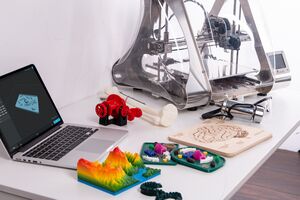
Tissue engineered constructs: for the repair and regeneration of different types of musculoskeletal tissues, including bone, cartilage and tendon. Encompasses knowledge and techniques from a wide range of disciplines eg biomechanics, materials science, engineering, computer modelling, nanotechnology, stem cells, cell and molecular biology, and animal models. The ultimate goal is to translate our laboratory discoveries into therapeutic products that can improve the clinical treatment of musculoskeletal conditions eg: 3D printing hierachically structured materials (see image); Tissue engineering scaffolds for tendon and ligament regeneration; Hydrogel scaffolds for cartilage regeneration.[5]
New research in biomechanics suggests that young people are developing hornlike spikes at the back of their skulls - bone spurs caused by the forward tilt of the head. The findings offer a warning about the impact of poor posture, especially in young people, due to extended phone and gadget use.
It is hypothesised that the sustained increase load at that muscle attachment is due to the weight of the head shifting forward with the use of modern technologies for long periods of time.
Shifting the head forwards results in the transfer of the head’s weight from the bones of the spine to the muscles at the back of the neck and head.
The bone spur/bump is a sign of sustained terrible posture.[6]
↑Hall SJ. What Is Biomechanics?. In: Hall SJ. eds. Basic Biomechanics, 8e New York, NY: McGraw-Hill; 2019. http://accessphysiotherapy.mhmedical.com/content.aspx?bookid=2433§ionid=191508967. (last accessed June 03, 2019).