When refering to evidence in academic writing, you should always try to reference the primary (original) source. That is usually the journal article where the information was first stated. In most cases Physiopedia articles are a secondary source and so should not be used as references. Physiopedia articles are best used to find the original sources of information (see the references list at the bottom of the article).
If you believe that this Physiopedia article is the primary source for the information you are refering to, you can use the button below to access a related citation statement.
Neurodynamics refers to the communication between different parts of the nervous system and to the nervous systems relationship to the musculoskeletal system. It has been shown that the nerves move independently from other tissues.[1]
Neurodynamics in the sense implied here is the mobilisation of the nervous system as an approach to physical treatment of pain. The treatment and or assessment relies on influencing pain physiology via the mechanical treatment of neural tissues and non-neural structures surrounding the nervous system. This mobilisation activates a range of mechanical and physiological responses in nervous tissues. eg neural sliding, pressurisation, elongation, tension and changes in intraneural microcirculation, axonal transport and nervous impulse movements.[2]
Neural mobilization to treat neurodynamic dysfunction to date is still needing justifcation through research of high quality homogenous studies. To date however most studies have shown positive therapeutic effects through the use of neurodynamic treatment. [3]
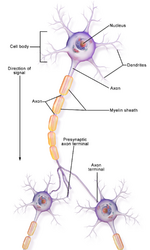
Neural Basics
To apply the principles of neurodynamics, a good understanding of the neural basics, as defined below, is needed.
Neurophysiology - study of the function of the nervous system.
Neurobiomechanics - based on the research of bioengineering researchers, neuro-surgery, orthopaedic surgery and biomechanisms, then utilised by neurosurgeons, orthopaedic surgeons and by integrated physical medicine practitioners (eg. physiotherapists, chiropractors, nurse practitioners). These practitioners focus on aiding people in the restoration of biomechanics of the skeletal system in order to measurably improve nervous system function, health, function, quality of life, reduce pain and the progression of degenerative joint and disc disease.[4]
Neuropathology- study of diseases of the nervous system.
This presentation, created by Jason Grandeo, as part of the OMPT Fellowship, reviews indications for using upper-limb neurodynamic tests, describes normal sensory responses for each of the upper limb neurodynamic tests, reviews the validity of the upper limb neurodynamic tests, and describes positive findings with upper limb neurodynamic tests.