
Cardiovascular and Respiratory Considerations in Function Based Rehabilitation
Original Editor - Ewa Jaraczewska based on the course by Rachael Moses
Introduction
Rehabilitation professionals play an important role in supporting individuals living with cardiorespiratory conditions. [1] Each profession has a different role within the wider multidisciplinary team, but all team members share the common goal of improving the quality of life of individuals with cardiorespiratory conditions.[2]
This article examines the role of the rehabilitation team in addressing respiratory symptoms and functional impairments associated with cardiorespiratory conditions. The approach in this page is guided by the World Health Organization's model of function-based rehabilitation.[3]
Breathlessness
Breathlessness, also known as dyspnoea / dyspnea, is a subjective feeling of uncomfortable / rapid breathing or the sensation of not being able to get enough air.[4] It can serve as a warning sign for potential underlying health conditions and should be properly assessed and placed in a holistic context for each patient.
Chronic Breathlessness

When breathlessness becomes chronic, it can affect many different aspects of life.[5] [6][7] For people with chronic breathlessness, even a minimal increase in demand on the respiratory or cardiovascular systems (e.g. during dressing, walking, etc.) can cause a disproportionate increase in the work of breathing.[8] Because of this, people with breathlessness often change their behaviour and daily activities to avoid situations that worsen their symptoms.[9] In the long term, these behavioural changes can have significant functional, psychological and social implications.[10]
Multi-system Impact
"Patients with respiratory failure often have difficulty maintaining oral nutrition intake because of associated breathlessness and are at increased risk of malnutrition (.....). "[11]
Increased work of breathing affects our body systems in a number of ways. For example, increased work of breathing affects metabolism and nutrition. While people with dyspnoea are often less active, their metabolic demands increase to support the additional energy cost of breathlessness. As a result, their nutritional requirements also increase. However, higher respiratory rates can cause fatigue and swallowing difficulties, which may make it difficult for people with breathlessness to reach their nutritional targets. This creates a nutritional deficit that accelerates muscle wasting and further compromises functional capacity.[8]
Reduced activity from breathlessness also leads to muscle weakness and deconditioning. This weakness affects both skeletal and respiratory muscles, compromising breathing efficiency.[12] Respiratory muscle weakness can compromise cough efficiency. A weak or ineffective cough affects airway clearance, increasing the risk of respiratory tract infections, respiratory dysfunction and functional decline.[13]
Understanding these connections provides the foundation for function-based rehabilitation approaches.
Cardiorespiratory Rehabilitation Team
Cardiorespiratory rehabilitation requires a coordinated, multidisciplinary team-based approach. Each rehabilitation team member undertakes in-depth evaluations and implements management strategies within their scope of practice. These interventions aim to help patients optimise their functional capacity, reduce the anxiety associated with breathlessness[14] and develop self-management strategies.[8]
The following sections discuss the different rehabilitation professions and their role in the cardiorespiratory team. Please remember that the scope of practice for each profession may be different depending on the country or region they practise in.
Respiratory Physiotherapists
Respiratory physiotherapists have a role in helping to reduce breathlessness and improve ventilation in individuals with cardiorespiratory conditions. They provide interventions to help people clear their airways and improve / maintain their exercise tolerance. Across these domains, they assess, diagnose, treat and advise patients. They also provide education to other members of the multidisciplinary team. Specific respiratory physiotherapy interventions include (1) breathing and positioning techniques to help reduce breathlessness and work of breathing, (2) airway clearance techniques to mobilise and facilitate the expectoration of secretions (3) developing and implementing exercise programmes to maintain and improve exercise tolerance (4) ventilator weaning for patients transitioning from mechanical ventilation and (5) delivering advanced respiratory care, including non-invasive ventilation and tracheostomy management.[8]
Respiratory Therapists
In some regions, there are also respiratory therapists. While they share some responsibilities with respiratory physiotherapists, respiratory therapists tend to focus on more technical aspects of respiratory care, such as optimising work of breathing through airway management and secretion clearance, improving ventilation efficiency through specialised respiratory equipment, applying advanced airway clearance techniques to mobilise and remove secretions, managing and implementing ventilator weaning protocols and enhancing oxygen therapy and delivery systems. They collaborate with physiotherapists on functional aspects of care.[15]

Speech and Language Therapists
Speech and language therapists (pathologists) address a number of critical functions related to respiratory health. They evaluate and treat swallowing disorders (dysphagia) that may be exacerbated by respiratory distress. They provide interventions to help people coordinate their breathing and swallowing to reduce aspiration risk and manage voice and speech challenges related to respiratory conditions. They also use oral-motor techniques to help with airway management and secretion clearance, and they develop communication strategies for patients with ventilatory support.[8]Speech and language therapists also work with people whomay experience breathlessness due to laryngeal dysfunction and are part of the multi-disciplinary team supporting people with traceostomies and laryngectomies.
Dietitians
Dietitians play an important role in supporting individuals with cardiorespiratory conditions, as nutritional status influences respiratory function. Dietitians assess and manage malnutrition and ensure nutritional intake meets the increased metabolic demands associated with respiratory conditions. They address nutrition impact symptoms like breathlessness and fatique and review and modify food textures to accommodate swallowing difficulties common in respiratory patients. They may also provide advice on weight management strategies and enteral feeding options.[8]
Occupational Therapists
Occupational therapists help people with cardiorespiratory conditions continue to perform meaningful daily activities based on their respiratory capacity. They introduce positioning techniques to help minimise breathlessness during activities and develop energy conservation and pacing strategies. They also introduce adaptive tools and techniques that reduce respiratory demand during daily tasks, including optimal transfer techniques. They can suggest environmental modifications to support a person's function at home and interventions that may improve quality of life.[8]
Pharmacists
Pharmacists play a key role in optimising the pharmacological management of respiratory conditions. They review medication interactions and monitor for adverse effects. They provide education on taking medications and using inhalers correctly. They also play a role in deprescribing medications (i.e. the planned, supervised process of reducing / stopping medications that are no longer of benefit or might be causing harm).[8]
Psychologists
Psychologists provide a range of support therapies. They introduce interventions to target the fear-avoidance cycle that often accelerates functional decline in individuals with respiratory conditions. Psychological interventions may include cognitive behavioural therapy, mindfulness and relaxation techniques.[8]
Caregivers and Family Members
Caregivers and family members can be active collaborators in the rehabilitation process. They often provide daily support to help implement rehabilitation strategies and can observe and report functional changes between medical or rehabilitation appointments. They can learn techniques to assist with breathlessness management during crises, support psychological well-being through social engagement and facilitate continued participation in meaningful activities.[8]
Physiotherapy Respiratory Assessment
History of Presenting Condition
When patients present for a physiotherapy evaluation, their presenting complaint is often breathlessness. Other concerns include sputum retention or cough. Physiotherapists aim to understand the full clinical picture through a detailed subjective assessment, including the type of symptoms and symptom development (i.e. sudden or gradual onset, severity, triggers, relieving factors, etc).[8]
Physiotherapists will look at systemic observations, including oxygen saturation levels, respiratory rate and heart rate, as well as blood pressure and temperature and compare them to the patient's baseline.
They also look at work of breathing, sputum volume, colour and viscosity or the presence of haemoptysis (blood in sputum), use of accessory muscles, breathing pattern and the patient's posture. Observing the patient's posture can highlight compensatory mechanisms to reduce respiratory effort.[16][8] They also listen to the patient's breathing through auscultation. If available, chest imaging helps with the differential diagnosis.[8]
Past Medical History
It is important to understand a patient's past medical history, including if they have any long-term conditions, such as chronic obstructive pulmonary disease (COPD) and asthma, or other co-morbidities, like hypertension, diabetes, cardiovascular disease, or neurological conditions. Physiotherapists will look at previous hospital admissions, including for acute respiratory exacerbations, as this can highlight a pattern of disease progression and response to interventions. They also look at a patient's surgical history, allergies, and vaccination status (e.g. COVID-19 and influenza).[8]
Within this history, it is also important to consider the patient's social situation, including their employment status, housing conditions and access to support systems.
Medication Review
Physiotherapists will note all relevant respiratory medications the patient is taking, including inhaler types (e.g. short-acting versus long-acting bronchodilators, corticosteroid inhalers, combination inhalers), dosages and frequency. The patient's inhaler technique should be checked.
Physiotherapists should also find out about the patient's long-term oxygen therapy requirements, including flow rates, hours of use, and delivery systems, and if they take any pain medications. This is important as inadequate pain control may restrict chest expansion and coughing effectiveness, while excessive sedation might suppress respiratory drive. They will also check for the use of nebulisers, diuretics and any cardiovascular medications.
Activity Levels and Functional Capacity
Physiotherapists should aim to understand a patient's usual activity level. Measures, such as the six minute walk test, provide a standardised method of assessing baseline activity. Additionally, physiotherapists include a range of functional assessments, such as a patient's ability to walk up hills / inclines and stairs. They will also look at if the patient requires any mobility aids.
It is also important to consider frailty. Frailty is a clinical state that is associated with an increased risk of falls, harm events, institutionalisation, care needs and disability/death.[17] We can score a patient's level of frailty using validated tools, such as the Frailty Index or the Clinical Frailty Score. You can find out more about frailty and these measures here.
Physiotherapists will also consider if the patient has participated in / completed any pulmonary rehabilitation programmes and the outcomes of these programmes. They will look at fatigue levels, smoking status (including current use, pack year history, attempts to stop smoking) and if any advanced decisions are in place.
If you would like to learn more about the physiotherapy respiratory assessment, please see: Respiratory Assessment.
Respiratory Physiotherapy Interventions
The effectiveness of respiratory physiotherapy interventions depends a lot on medical optimisation.[8]
Before starting rehabilitation, patients should receive appropriate medical management, including supplementary oxygen, nebulised medications, antibiotic therapy, fluid management, and adequate pain control. Ensuring medical care is optimised significantly enhances rehabilitation outcomes and patient satisfaction. A range of physiotherapy interventions are discussed below.
Active Cycle of Breathing
The active cycle of breathing techniques (ACBT) is a series of breathing techniques designed to help clear secretions. It starts with relaxed breathing, followed by deep breathing or thoracic expansion exercises, forced expiratory techniques and coughing (Figure 3).[8] It has been found that ACBT can improve the volume of expectorated sputum, reduce sputum viscoelasticity, enhance pulmonary function and relieve dyspnoea.[18]
If you would like to read a detailed description of ACBT, please see this optional article: Active Cycle of Breathing Technique.
Diaphragmatic Breathing
Diaphragmatic breathing (Figure 4), also known as abdominal breathing, is a slow and deep breathing technique that may improve exercise capacity and respiratory function in individuals with COPD. Furthermore, diaphragmatic breathing may enhance cardiorespiratory fitness and help reduce stress and anxiety, which are associated with breathlessness.[19]
Please see Diaphragmatic Breathing Exercises if you would like more information on the diaphragm's role in respiration, the physiological effects of diaphragmatic breathing, and how to perform diaphragmatic breathing.
-
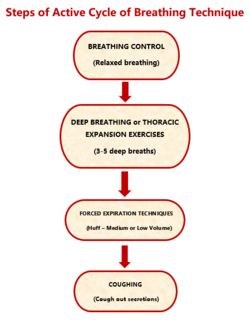 Figure 3. The active cycle of breathing technique.
 -
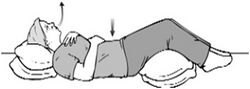 Figure 4. Diaphragmatic breathing.


Box Breathing
Box breathing (Figure 5) is a controlled breathing technique that can be useful for people with breathlessness to help with stress management and well-being.[20] This technique can be implemented before, during, and / or after stressful experiences.
Please see Breathing Exercises if you would like to learn more about box breathing.
Pursed Lip Breathing
During pursed lip breathing (Figure 6), the patient inhales through their nose with their mouth closed and then exhales through pursed lips. This technique helps patients control their breathing, decrease their work of breathing and reduce respiratory distress.[21]
If you would like to read a full description of the pursed lip breathing technique, please see: Pursed Lip Breathing.
-
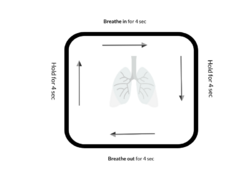 Figure 5. Box breathing.
 -
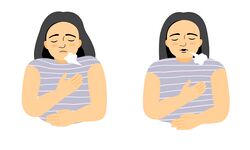 Figure 6. Pursed lip breathing.


Breathing Pattern Disorders
Breathing pattern disorder (BPD) is an umbrella term for a range of abnormal patterns of breathing. BPDs can develop when certain triggers disturb a patient's normal breathing pattern, resulting in dysfunctional breathing. BPDs can cause a range of distressing respiratory and non-respiratory symptoms despite a lack of an underlying pathophysiological cause. Symptoms can include: feeling short of breath, chest pain or palpitations, lightheadedness and dizziness.
The following videos provide a guide to breathing in lying and sitting:
Positioning
Positioning is an important rehabilitation intervention and self-management strategy for people with breathlessness. Positioning can influence respiratory mechanics, and diaphragmatic efficiency and help to reduce the work of breathing. The following positions can be beneficial.
Forward-leaning while seated: the patient sits with their hands supported either on their knees or on a table surface, potentially with pillow support for additional comfort. This forward-leaning posture enhances diaphragmatic excursion and reduces accessory muscle recruitment, decreasing the overall work of breathing (see figure on left below).[24]
Wall-supported standing: the patient stands with their back against a wall. This provides stability while promoting chest expansion (see figure in centre below).
High side lying (with the upper body elevated): the patient lies on their side with pillows to elevate their upper body. This position reduces pressure on the diaphragm and improves ventilation-perfusion matching for patients requiring rest positions (see figure on right below).[8]


Airway Clearance Techniques
Airways clearance techniques (ACTs) include a range of therapeutic strategies designed to address secretion management in respiratory care. ACTs aim to reduce obstruction in airways caused by accumulated secretions and, in doing so, prevent respiratory tract infections. They also aim to facilitate the re-expansion of collapsed lung areas. This helps to optimise gas exchange and reduce the inflammatory response associated with retained secretions.[25]
The effectiveness of ACTs depends on patient-specific factors. Engagement with treatment depends on their motivation to adhere to treatment protocols, their satisfaction, and the perceived benefit of these techniques. Therapeutic decision-making must balance clinical efficacy with individual preferences and lifestyle considerations.
Chest Percussion
Percussion is a manual technique that involves loosening and mobilising secretions from the smaller airways so they can be cleared more easily through the larger airways. It is a "rhythmic succession of rapid and light strokes performed with cupped hands on the patient's chest wall."[25]
If you would like to learn more about chest percussion technique, please read this article: Percussion.
The following video shows how to perform chest percussion in side-lying:
Cough Assist
A manually assisted cough (MAC) helps to increase cough strength and assist with secretion clearance. It is useful for patients with significant respiratory muscle weakness. To perform this technique, a physiotherapist will apply an external force to the patient's diaphragm and lower ribcage during expiration, generating the increased intrathoracic pressure needed for effective coughing. MAC can be adapted to various patient positions and performed by one or two practitioners.
There are also various mechanical cough assist machines that can complement manual techniques.
If you would like to learn more about MAC and cough assist machines, please see Assisted Coughing.

Energy Conservation
Energy conservation is a fundamental part of respiratory rehabilitation. It's particularly important for people who experience pain and fatigue. These techniques are often introduced by physiotherapists and occupational therapists.[27]
Energy conservation techniques help patients complete activities independently while reducing the amount of energy used.[27]
Physiotherapists often use the four principles of energy conservation, known as the 4Ps. These are: positioning, planning, prioritising, and pacing. As shown in Figure 8, positioning includes strategies such as posture, sitting instead of standing and pushing / pulling instead of lifting. Planning encourages patients to consider when they do activities, spreading activities across the day and timing / organising activities. Prioritising encourages patients to consider the importance of an activity, what is realistic, and if they should ask for help. Finally, pacing includes strategies like taking breaks, having a routine and slowing down.
The spoon theory is an effective tool to help patients visualise and manage their daily energy reserves. In this analogy, patients are asked to imagine having a set number of spoons each day. They have to prioritise what to spend their spoons on. Different tasks use different amounts of spoons. Different factors, such as sleep quality or medical appointments, can affect the available number of spoons (i.e. energy) for the day.[8] If you would like to learn more about the spoon theory, please see: The Spoon Theory written by Christine Miserandino.
Peripheral Oedema
Peripheral oedema is caused by a number of conditions and involves multiple organs. Management of peripheral oedema requires a specialist interprofessional approach, with rehabilitation professionals and physiotherapists playing an important role. Physiotherapists offer advice on lifestyle modifications, such as exercise, diet and skin care, and help to prevent long-term complications. If lymphoedema is present, specific physiotherapy techniques may be useful, including manual lymphatic drainage (MLD) or complete decongestive therapy (CDT). These interventions require in-person, hands-on training, but if you are interested in reading more, please see the linked texts.
Self-Management in Cardiorespiratory Disease
People who are supported to learn self-management techniques are more likely to experience improvements in anxiety and depression, reduced respiratory symptoms and fewer acute exacerbations of symptoms. Developing individualised self-management interventions requires active collaboration between healthcare professionals, patients, and their support network.
Effective self-management interventions usually focus on behavioural change. Ideally, self-management interventions will be structured, personalised and motivating for patients.[28] They include various components, such as:[29]
- shared decision making
- self-treatment protocols for exacerbations
- symptom monitoring and management
- smoking cessation
- adequate physical activity
- nutritional optimisation
The goals of self-management for people with cardiorespiratory conditions include optimising / preserving physical health and function, reducing symptoms and functional impairments, increasing emotional and social well-being and quality of life and establishing effective support mechanisms with healthcare professionals, family, friends and the community.
Resources
References
- ↑ Zikrillaev FA. Cardiorehabilitations from Physiotherapeutic Treatments in Cardiovascular Diseases. American Journal of Bioscience and Clinical Integrity. 2024 Oct 21;1(10):96-102.
- ↑ Brown TM, Pack QR, Aberegg E, Brewer LC, Ford YR, Forman DE, Gathright EC, Khadanga S, Ozemek C, Thomas RJ. Core components of cardiac rehabilitation programs: 2024 update: a scientific statement from the American Heart Association and the American Association of Cardiovascular and Pulmonary Rehabilitation. Circulation. 2024 Oct 29;150(18):e328-47.
- ↑ Carlos FA. Health Systems Approach to Strengthen Rehabilitation. Acta Medica Philippina. 2024 Nov 15;58(20):6.
- ↑ Funaguchi N, Ogasawara M, Kiryu T, Terashima T, Gon Y, Shimizu T, Sawai H. 1 Respiratory/Infection Symptoms. Chapter 1: Dyspnea in: Internal Medicine for Dental Treatments: Patients with Medical Diseases. 2024 Feb 15:3.
- ↑ Currow DC, Chang S, Grande ED, Ferreira DH, Kochovska S, Kinchin I, Johnson MJ, Ekstrom M. Quality of Life Changes With Duration of Chronic Breathlessness: A Random Sample of Community-Dwelling People. J Pain Symptom Manage. 2020 Oct;60(4):818-827.e4
- ↑ Phillips J, Dal Grande E, Ritchie C, Abernethy AP, Currow DC. A population-based cross-sectional study that defined normative population data for the Life-Space Mobility Assessment-composite score. J Pain Symptom Manage. 2015 May;49(5):885-93.
- ↑ Kochovska S, Chang S, Morgan DD, Ferreira D, Sidhu M, Saleh Moussa R, Johnson MJ, Ekström M, Currow DC. Activities Forgone because of Chronic Breathlessness: A Cross-Sectional Population Prevalence Study. Palliat Med Rep. 2020 Aug 18;1(1):166-170.
- ↑ 8.00 8.01 8.02 8.03 8.04 8.05 8.06 8.07 8.08 8.09 8.10 8.11 8.12 8.13 8.14 8.15 8.16 8.17 Moses R. Cardiovascular and Respiratory Approach in Function-Based Rehabilitation Course. Plus, 2025.
- ↑ Punekar YS, Mullerova H, Small M, Holbrook T, Wood R, Naya I, Valle M. Prevalence and Burden of Dyspnoea Among Patients with Chronic Obstructive Pulmonary Disease in Five European Countries. Pulm Ther 2016; 2: 59–72
- ↑ Poulos LM, Ampon RD, Currow DC, Marks GB, Toelle BG, Reddel HK. Prevalence and burden of breathlessness in Australian adults: The National Breathlessness Survey-a cross-sectional web-based population survey. Respirology. 2021 Aug;26(8):768-775.
- ↑ Roffe A, Schneider ML, Brown M, Ludwig D, Citty SW. The implementation of indirect calorimetry for patients with acute respiratory failure: Invited commentary on techniques and procedure. Nutrition in Clinical Practice. 2025 Jun;40(3):544-54.
- ↑ Kochovska S, Currow D, Chang S, Johnson M, Ferreira D, Morgan D, Olsson M, Ekström M. Persisting breathlessness and activities reduced or ceased: a population study in older men. BMJ open respiratory research. 2022 May 1;9(1):e001168.
- ↑ Kang SW, Kang YS, Sohn HS, Park JH, Moon JH. Respiratory muscle strength and cough capacity in patients with Duchenne muscular dystrophy. Yonsei Med J. 2006 Apr 30;47(2):184-90.
- ↑ Brighton LJ, Miller S, Farquhar M, Booth S, Yi D, Gao W, Bajwah S, Man WD, Higginson IJ, Maddocks M. Holistic services for people with advanced disease and chronic breathlessness: a systematic review and meta-analysis. Thorax. 2019 Mar;74(3):270-281.
- ↑ 5 Essential Roles Of A Respiratory Therapist In Patient Care. Available from https://www.healthcareoriginals.com/5-essential-roles-of-a-respiratory-therapist-in-patient-care/ [last access 20.02.2025]
- ↑ Cho SH, Choi KB. Guidelines for the Evaluation of Cardiorespiratory Physiotherapy in Stroke Patients. Healthcare (Basel). 2020 Jul 22;8(3):222.
- ↑ Buxton S. An Introduction to Frailty course. Plus. 2020.
- ↑ Zisi D, Chryssanthopoulos C, Nanas S, Philippou A. The effectiveness of the active cycle of breathing technique in patients with chronic respiratory diseases: A systematic review. Heart Lung. 2022 May-Jun;53:89-98.
- ↑ Hamasaki H. Effects of Diaphragmatic Breathing on Health: A Narrative Review. Medicines (Basel). 2020 Oct 15;7(10):65.
- ↑ Balban MY, Neri E, Kogon MM, Weed L, Nouriani B, Jo B, Holl G, Zeitzer JM, Spiegel D, Huberman AD. Brief structured respiration practices enhance mood and reduce physiological arousal. Cell Rep Med. 2023 Jan 17;4(1):100895.
- ↑ Nguyen JD, Duong H. Pursed-lip Breathing. [Updated 2025 Jan 25]. In: StatPearls [Internet]. Treasure Island (FL): StatPearls Publishing; 2025 Jan-. Available from: https://www.ncbi.nlm.nih.gov/books/NBK545289/
- ↑ Physiotherapy for breathing pattern disorders. Good Breathing Guide in Lying. Available from: https://www.youtube.com/watch?v=76YC2qlwblU [last accessed 4/3/2025]
- ↑ Physiotherapy for breathing pattern disorders. Good Breathing Guide in Sitting. Available from: https://www.youtube.com/watch?v=UoHYU8V-k50 [last accessed 4/3/2025
- ↑ Koga C, Mase K, Takashima S, Yamamoto K, Mineoka R, Ozaki K. Work of breathing and lung volume during forward leaning supported by the upper limbs. Respir Physiol Neurobiol. 2023 Jul;313:104070.
- ↑ 25.0 25.1 Belli S, Prince I, Savio G, Paracchini E, Cattaneo D, Bianchi M, Masocco F, Bellanti MT, Balbi B. Airway Clearance Techniques: The Right Choice for the Right Patient. Front Med (Lausanne). 2021 Feb 4;8:544826.
- ↑ NHS University Hospitals Plymouth Physiotherapy. Percussion. Available from: http://www.youtube.com/watch?v=1ZRk55sHJ1I [last accessed 4/3/2025]
- ↑ 27.0 27.1 Mahoney K, Pierce J, Papo S, Imran H, Evans S, Wu WC. Efficacy of adding activity of daily living simulation training to traditional pulmonary rehabilitation on dyspnea and health-related quality-of-life. PLoS One. 2020 Aug 27;15(8):e0237973.
- ↑ Kelly C, Heslop-Marshall K, Jones S, Roberts NJ. Self-management in chronic lung disease: what is missing? Breathe (Sheff). 2022 Mar;18(1):210179.
- ↑ Schrijver J, Lenferink A, Brusse-Keizer M, Zwerink M, van der Valk PD, van der Palen J, Effing TW. Self-management interventions for people with chronic obstructive pulmonary disease. Cochrane Database Syst Rev. 2022 Jan 10;1(1):CD002990.