
Overview of Wound Compression and Offloading Methods
Top Contributors - Stacy Schiurring and Jess Bell
Introduction
Compression and offloading are two commonly used wound care interventions. They are important adjuncts to wound cleansing and dressing care plans as they help manage the effects that oedema and pressure may have on a healing wound. They also help prevent healed wounds from reopening and new wounds from forming.
Thorough wound and patient assessment, selecting the appropriate compression level and device, and skilled application techniques are vital to the success of wound compression therapy.
Safe practice of compression therapy and offloading techniques requires hands-on, in-person training and a skills check, which should be completed before applying these methods in patient care.
Patient Assessment and Screening
Before initiating compression or offloading as part of a wound care treatment plan, a thorough assessment should be performed. This assessment should cover: (1) wound location, (2) wound size and depth, (3) amount of drainage, (4) periwound skin condition, (5) presence of infection in the treatment area, (6) presence of pain, (7) circulation status, and (8) underlying medication conditions that could affect wound healing.
Circulation assessments can include palpation of pulses (dorsalis pedis, posterior tibial), the ankle-brachial index (ABI) calculation and capillary refill and rubor of dependency testing. The following optional videos provide clinical demonstrations of these circulation assessments:
Compression
Compression is the use of controlled external pressures provided by compression dressings or compression therapy devices to improve blood circulation, reduce peripheral oedema, and promote wound healing by facilitating the removal of excess fluid from a wound site. Compression therapy for a wound can be provided in several ways, including via (1) compression bandages or wraps, (2) compression stockings, and (3) pneumatic compression devices. A key factor in compression therapy is the controlled application of the compression.
Compression therapy aids in wound healing in several ways.[4][5] It can improve blood circulation. Compression therapy helps move blood back into the venous system, reducing blood pooling in the extremities. Improved circulation also enhances the delivery of nutrients and oxygen to the wound site and the removal of waste products from the wound site, thus further improving the conditions needed for healing.[6] Sustained pressure on the lower limb provided by compression therapy assists the calf muscles to function effectively as a "muscle pump". This allows for increased venous return toward the heart. Compression therapy also helps to restore venous valve competence and reduce venous reflux.[7]
In addition, compression therapy helps to reduce oedema by removing excess fluid from the affected tissues in the treatment area. Decreasing oedema in the treatment area both promotes tissue healing and alleviates pain.
Compression therapy also promotes tissue oxygenation. Oxygen is critical for wound healing. Adequate tissue oxygen levels are needed to support granulation tissue formation and fuel tissue repair. Compression therapy helps to increase tissue oxygenation by facilitating blood flow and reducing tissue hypoxia. Finally, compression therapy has the added benefit of pain reduction.
Indications for Compression Therapy
Compression therapy is indicated for the following conditions:
- venous insufficiency
- pressure ulcer prevention
- lymphoedema
- oedematous wounds[4][8]
There are a number of wound-related conditions and diagnoses that can benefit from compression therapy, including arterial ulcers, diabetic foot ulcers, lymphoedema, oedema, post-surgical incision line care, pressure ulcers and venous ulcers.[4][8]
Contraindications and Precautions for Compression Therapy
Key contraindications and precautions for compression therapy include:
- advanced peripheral arterial disease (PAD)
- systemic arterial pressure <80 mm Hg at ankle
- uncontrolled congestive heart failure (CHF)
- ischaemia in the treatment area
- deep vein thrombosis (DVT)
- septic phlebitis (thrombophlebitis) in the treatment area
- phlegmasia cerulea dolens
- infection in the treatment area (e.g., cellulitis)
- abscesses in the treatment area
- advanced peripheral neuropathy or other causes of impaired sensation in the treatment area
- immobility due to obesity or paralysis[4][9]
Types of Compression Utilised in Wound Care
Compression therapy can come in the form of compression bandages (wraps), stockings, or pneumatic compression devices.[10] Compression bandages can be classified as inelastic (short-stretch bandages) or elastic (long-stretch bandages).[9]
Inelastic (short-stretch) bandages are reusable cotton dressings. They have a high level of stiffness. They provide firm and constant support for the calf muscles during ambulation and low pressure when the patient is at rest.[9]
Elastic (long-stretch) bandages can stretch to several times their original length (between 140% to 300%). They can conform to any shape with sustained pressure. These bandages have a high resting pressure and low working pressure, and provide continuous compression while at rest and during mobility.[9]
Multilayer compression bandages consist of two or more layers of elastic and / or inelastic material and padding structures. These bandages can provide uniform compression in both resting and ambulatory states.[9]
Please see Table 1 for a description of the different categories of compression bandages.
"Wounds treated with compression heal faster than those not treated with compression, multi-layer compression is more effective than single-layer compression, and elastic compression is more effective than inelastic compression." - Dr. Dana Palmer, PT
When applying compression dressings, please refer to the product inserts for application instructions and precautions specific to each product.[10] Product information can be looked up here under the compression category.
| Advantages | Disadvantages | Clinical examples | |
|---|---|---|---|
| Elastic wraps |
|
|
|
| Cohesive compression bandages |
|
|
|
| Inelastic bandages
(short-stretch bandages) |
|
|
|
| Inelastic paste bandages |
|
|
|
| Multilayer bandage systems |
|
|
Available in two, three, and four-layered systems
|
| Elastic bandages
(long-stretch bandages) |
|
|
Compression stockings are typically produced in two forms: (1) leg-shaped or (2) flat knitted. The leg-shaped variety can be made to be knee-length or thigh-length depending on the patient's need. Compression stockings are not introduced into a wound care treatment plan until all wounds are closed. The goal of compression stockings is to prevent new wounds or healed wounds from reopening.[9]
Intermittent compression therapy is provided by pneumatic pressure devices. These devices apply external pressure using a cylinder pump that encircles the leg. The pump inflates and deflates, and the resulting action mimics the effect of repeated application of compression bandages or the action of the calf muscle pump. This form of pneumatic compression is appropriate for patients who cannot tolerate sustained pressure or who have restricted mobility.[4]
Offloading
Offloading is the reduction or redistribution of pressure, force, or weight from a specific area of the body, such as a wound site, to promote healing. In wound care, the goals of offloading are to reduce the risk of tissue breakdown caused by pressure, promote circulation, and create an overall environment that supports wound healing.[11] For offloading to be effective, it needs to be maintained all day - i.e. 24 hours per day.[10]
An important therapeutic goal of offloading is to maintain the limb's function and normalise movement patterns (and thus pressures and forces exerted through the area) as much as possible.[12] A combination of multiple forms of offloading may be needed as part of a wound care plan to aid in patient comfort and compliance.[10]
Offloading has various benefits and is considered an important component of a wound care treatment plan.[12] It helps to prevent pressure injuries. This is particularly important for patients with limited mobility or activity limitations (e.g., bedrest). Proper offloading helps to mitigate the risk of pressure injury development.
Offloading can also facilitate optimal wound healing by reducing pressure-induced trauma, enhancing blood flow, and creating an ideal environment for tissue regeneration.
It can help to prevent or minimise wound recurrence by addressing underlying factors that contribute to tissue breakdown (e.g., prolonged pressure or friction). And finally, it can improve patient comfort by reducing pain and discomfort associated with pressure and friction injuries.[12]
Offloading Assessment
When assessing a patient for offloading strategies, it is important to consider (1) the location of the wound, (2) the status of the wound (vascular status of the area, presence of infection, and proper wound bed and periwound preparation), (3) the patient's overall health (glucose management,[13] cardiovascular health, overall prognosis, etc.), (4) the patient's current mobility status and ability, (5) occupational surfaces (e.g., do they stand on concrete during an 8-hour shift, do they walk over an uneven rocky path to access public transportation, are they unable to mobilise out of bed, are they nonambulatory, or are they a wheelchair user?), (6) environmental factors (e.g., rain, mud, hot weather, pressure relieving mattress or cushion); and for patients with foot wounds, (7) the quality of their normal footwear (inside and outside), and (8) the type and quality of socks worn (e.g. no socks, socks that are too tight, diabetic socks).[12]
Clinical Pearls: Non-weight bearing versus offloading
Non-weight bearing is the complete elimination of any weight or force placed on a tissue or body part. The body part is positioned to avoid any contact with surfaces that could apply force or stress. Offloading minimises or removes any weight or force that could be directed into or through the body part or tissue. Non-weight bearing is technically a form of offloading BUT not all forms of offloading are considered non-weight bearing.[14]
Clinical example: a patient has a wound on the plantar aspect of their foot.
Non-weight-bearing strategies for this patient could include the use of assistive devices, such as crutches, walkers, or knee scooters where the patient bears weight through the uninvolved contralateral leg and bilateral upper extremities for mobility or ambulation while maintaining no weight through the involved foot.
Offloading strategies for this patient could include the use of a total contact cast, orthotic shoes and/or shoe cutouts, and offloading footwear. These options are designed to reduce the weight or force being directly applied to the wound while still allowing the patient to weight bear (even in a partial form) through the limb.
Indications for Offloading
Offloading is indicated for the following conditions and situations:
- presence of a pressure-related injury (common locations are the heels, buttocks and sacrum)
- neuropathic ulcers
- peripheral neuropathy or other causes of impaired sensation in the treatment area
- poor or impaired circulation to the treatment area (e.g., peripheral vascular disease)
- wounds of significant size or depth
- painful wounds
- patients with limited mobility (often a wound prevention intervention)[11]
Common wound-related conditions and diagnoses that can benefit from offloading include neuropathic ulcers, pressure injuries and ANY wound that is on a weight-bearing surface of the foot.[12]
Contraindications and Precautions for Offloading
Key contraindications and precautions for non-removable offloading methods include:
- moderate to severe ischaemia
- infection in the treatment area (e.g., cellulitis, osteomyelitis, gangrene)
- abscess in the treatment area
- severe arterial insufficiency
- highly draining wounds
- unstable joints
- poor patient compliance or tolerance with wearing[15][16]
Types of Offloading Methods Utilised in Wound Care
There are a range of offloading methods used in wound care, including pressure-relieving devices, mobility devices, offloading boots and footwear, total contact casting and dressings for overloading.
Pressure-relieving devices are a diverse group of devices designed to distribute pressure evenly across the body surface, reducing the risk of pressure injuries. These devices involve cushions of various sizes filled with air, foam, or gel (or a combination of foam and gel) and can involve pressure alternating systems.[10][11] Examples include: specialised mattresses, mattress overlays and wheelchair cushions.
Mobility devices can be used as part of an offloading care plan to achieve partial or non-weight bearing during transfers and ambulation.[10] Examples include: crutches, walkers and wheelchairs.
Offloading boots and footwear offload pressure from different areas of the feet and redistribute weight to healthier areas.[10] Examples include: heel-relief and forefoot-relief shoes, shoe inserts and custom speciality shoes with cut-outs.
In total contact casting (TCC), a cast or removable boot that conforms closely to the shape of the lower limb and foot is applied. It evenly distributes weight-bearing pressure across the foot. The gold standard for offloading neuropathic ulcers is the TCC.[10][16] A TCC can be made into a removable offloading method by cutting it in half and creating a "bivalve" cast that can be removed for wound care and skin inspection. Additional examples include: CAM walker boots and the Charcot restraint orthotic walker.
Dressings can be used as part of an offloading care plan. They can serve as effective, inexpensive alternatives to the methods listed above. Mobility devices are used to enhance the effectiveness of offloading through dressings.[10][17] Examples include: foam offloading pads, felt offloading pads and football dressings.
-
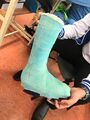 Total contact cast
-
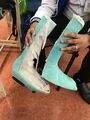 Total contact cast, showing bivalve cut
-
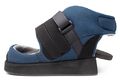 Heel offloading shoe
-
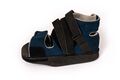 Toe offloading shoe
-
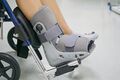 Air cast style walking boot


Resources
- European Wound Management Association, Evidence and Guidelines Compression Therapy Campaign
- International Working Group on the Diabetic Foot, Guidelines for Offloading Foot Ulcers in Persons with Diabetes, 2023 update
- Weller CD, Buchbinder R, Johnston RV. Interventions for helping people adhere to compression treatments for venous leg ulceration. Cochrane Database of Systematic Reviews. 2016(3).
References
- ↑ YouTube. Palpating Pulses of the Foot | Motivation Australia. Available from: https://www.youtube.com/watch?v=IwRBh6Sw7UE [last accessed 05 December 2024]
- ↑ YouTube. The ABI test | Motivation Australia. Available from: https://www.youtube.com/watch?v=M6BodyH2YVs [last accessed 05 December 2024]
- ↑ YouTube. Capillary Refill & Rubor of Dependency - Vascular Test | Klose Training. Available from: https://www.youtube.com/watch?v=eJWbJ4pzX18 [last accessed 05 December 2024]
- ↑ 4.0 4.1 4.2 4.3 4.4 4.5 Nair B. Compression therapy for venous leg ulcers. Indian dermatology online journal. 2014 Jul 1;5(3):378-82.
- ↑ Shi C, Dumville JC, Cullum N, Connaughton E, Norman G. Compression bandages or stockings versus no compression for treating venous leg ulcers. Cochrane Database of Systematic Reviews. 2021(7).
- ↑ The Wound Pros Blog. How Compression Therapy Enhances Wound Healing. [Internet]. 2024 [cited 02 December 2024]. Available from: https://www.thewoundpros.com/post/how-compression-therapy-enhances-wound-healing
- ↑ Shavit E, Alavi A. Compression therapy for non‐venous leg ulcers: Current viewpoint. International Wound Journal. 2019 Dec;16(6):1581.
- ↑ 8.0 8.1 Nickles MA, Ennis WJ, O'Donnell Jr TF, Altman IA. Compression therapy in peripheral artery disease: a literature review. Journal of Wound Care. 2023 May 1;32(Sup5):S25-30.
- ↑ 9.0 9.1 9.2 9.3 9.4 9.5 9.6 The Wound Pros Blog. Compression Therapy for Wound Management. [Internet]. 2024 [cited 02 December 2024]. Available from: https://www.thewoundpros.com/post/compression-therapy-for-wound-management-what-patients-should-know
- ↑ 10.00 10.01 10.02 10.03 10.04 10.05 10.06 10.07 10.08 10.09 Palmer D. Physiotherapy Wound Care Programme. Overview of Wound Compression and Offloading Course. Plus, 2024.
- ↑ 11.0 11.1 11.2 The Wound Pros Blog, What you Need to Known About Wound Offloading [Internet]. 2024 [cited 03 Decemeber]. Available from: https://www.thewoundpros.com/post/what-you-need-to-know-about-wound-offloading
- ↑ 12.0 12.1 12.2 12.3 12.4 Mrdjenovich DE. Off-loading practices for the wounded foot: concepts and choices. The Journal of the American College of Certified Wound Specialists. 2010 Dec 1;2(4):73-8.
- ↑ Today's Wound Clinic. Offloading 101 for the Outpatient Wound Clinic. Available from: https://www.hmpgloballearningnetwork.com/site/twc/articles/offloading-101-outpatient-wound-clinic (accessed 3 December 2024).
- ↑ Wound Care Education Institute. Non-Weightbearing vs. Offloading: Is There a Difference? Available from: https://blog.wcei.net/non-weightbearing-vs-offloading-is-there-a-difference (accessed 3 December 2024).
- ↑ Bus SA, Armstrong DG, Crews RT, Gooday C, Jarl G, Kirketerp‐Moller K, Viswanathan V, Lazzarini PA. Guidelines on offloading foot ulcers in persons with diabetes (IWGDF 2023 update). Diabetes/metabolism research and reviews. 2024 Mar;40(3):e3647.
- ↑ 16.0 16.1 Mrdjenovich DE. Off-loading practices for the wounded foot: concepts and choices. The Journal of the American College of Certified Wound Specialists. 2010 Dec 1;2(4):73-8.
- ↑ McGuire J, Ansert E. Take A Load Off: Offloading Tips And Pearls In Wound Care [Internet]. 2021 [cited 05 December 2024]. Available from: https://www.hmpgloballearningnetwork.com/site/podiatry/case-study/take-load-offloading-tips-and-pearls-wound-care