When refering to evidence in academic writing, you should always try to reference the primary (original) source. That is usually the journal article where the information was first stated. In most cases Physiopedia articles are a secondary source and so should not be used as references. Physiopedia articles are best used to find the original sources of information (see the references list at the bottom of the article).
If you believe that this Physiopedia article is the primary source for the information you are refering to, you can use the button below to access a related citation statement.
Clinical biomechanics in sports can be used to enhance sports performance and reduce injury. A wide range of techniques are used such as computer simulations, measurements and mathematical modelling in various sports and exercises. Recent advances have integrated basic science with applied technology to improve performance analysis and injury prevention capabilities.[1]
Biomechanics Definitions
Biomechanics is the study of the structure and function of biological systems by means of the methods of mechanics.[2] A more relevant definition to sports clinicians is[2]:
“The application of mechanical principles in the study of living organisms”
Sport and exercise biomechanics encompass the area of science concerned with the analysis of the mechanics of human movement.[2] It refers to the description, detailed analysis, and assessment of human movement during sport activities.[3] Mechanics is a branch of physics that is concerned with the description of motion/movement and how forces create motion/movement. In other words, sport biomechanics is the science of explaining how and why the human body moves in the way that it does. In sport and exercise, that definition is often extended to also consider the interaction between the athlete and their equipment and environment.
Biomechanics is traditionally divided into the areas of[2]:
Kinematics - a branch of mechanics that deals with the geometry of the motion of objects, including displacement, velocity, and acceleration, without considering the forces that produce the motion. It is the study of the description of motion.
Kinetics - study of the relationships between the force system acting on a body and the changes it produces in body motion. It is the study of the forces and torques that cause motion of a body.
In terms of these areas, there are skeletal, muscular and neurological considerations when describing biomechanics.[3]
Comparative biomechanics (e.g. locomotion in animals)
Equine racing performance
Exercise and sport biomechanics
Traditionally sports biomechanics is aimed at[9][10]:
Improving performance
Treatment and prevention of injury
Some of the areas where biomechanics is applied to improve performance or prevent issues in sports are:
Identification of optimal technique for improving sports performance
Analysis of body loading to find the safest way to perform a particular sport or exercise task
Assessment of muscle recruitment and loading
Analysis of sport and exercise equipment and implementing design (e.g. shoes, surfaces, racquets, clubs, bats, helmets, bikes)
Principles of Biomechanics
Knowledge of several biomechanical terms and principles is useful when considering the role of biomechanics in sport and exercise. Read more about these principles such as force, torque, Newton's laws of motion, momentum, centre of gravity and balance here: Principles of Biomechanics.
Incorrect technique can lead to abnormal biomechanics which can lead to injury. Some examples of the relationship between technique and associated injuries are listed in the table below.
Running technique and biomechanics affect a runner’s performance[19]
The forces placed on a runner as well as the effects of these forces can be determined by evaluating running biomechanics[20]
Wearable technologies such as accelerometers and pressure sensors are validated instruments for monitoring gait in sports settins, with specific focus on spatiotemporal features and injury risk management.[21]
The aim of biomechanics applied to cycling is to improve the cyclist’s interaction with the bicycle by improving the comfort of the position (posture) and efficiency (pedalling).
The biomechanics of tennis stroke and serve techniques are complex. Furthermore, the equipment choices such as the racquet and the range of surfaces add to this complexity. Forces from the ball/racquet impact during different and repetitive strokes can lead to upper limb overuse injuries and player-surface interactions often lead to lower limb acute injuries.[22]
Increased stress is placed on the elbow and shoulder in a player with improper throwing or pitching biomechanics and this leads to an increased risk of injury.
Biomechanical assessments of throwing can identify issues in performance and injury and it is important for clinicians to understand these biomechanics.[24]
Clinicians working with golf players need to understand some important factors linked to the golf swing, this will help guide testing as well as rehabilitation and exercise prescription.[25] These factors can include:
The x-factor – rotation of the thoracic spine relative to the pelvis at the top of the backswing
The x-factor stretch – maximal x-factor that occurs during the start of the downswing, as the pelvis begins to rotate back towards the target
Research has shown that if the x-factor stretch (the rotational gap between the pelvis and upper body) can be widened it can increase driving distance
The impact of ground reaction forces during the golf swing
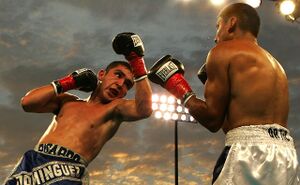
Boxing
Bent arm shot in boxingThe two main shots in boxing are:
Bent arm shot
Straight arm shot
Dinu et al.[26] examined the biomechanics of the cross, hook and uppercut between two elite boxing groups (seniors vs juniors). The authors reported the following[26]:
The elbow contributed the most to the cross which is a straight arm shot
The shoulder contributed the most to the hook and uppercut shots which are bent arm shots
In junior elite boxers, the shoulder contribution for all three shots (cross, uppercut and hook) was higher than in senior boxers indicating that there is more motion at the shoulder in inexperienced boxers compared to experienced boxers.
Biomechanical assessments such as these provide valuable information for clinicians and athletes to improve performance and refine training and rehabilitation practices. Furthermore, it provides a better understanding of why certain types of injuries occur.
A Clinician’s Perspective and Journey with the Clinical Use of Biomechanics in Boxing
Forces working on the carpometacarpal joint
Another example of the usefulness of biomechanics to clinicians is with hand and wrist injuries in boxing. Hand-wrist injuries account for 6 – 35% of all boxing injuries in training and competition. The most common injury is carpometacarpal instability of the hand. This injury also incurs the most time loss from training.[27][28]
Injury mechanism of the carpometacarpal joint
In the images on the right the injury mechanism of the carpometacarpal joint in a boxer’s hand is explained. The yellow line represents the metacarpal bone, the blue line represents the carpal bones. The dark blue arc represents the dorsal ligaments. The red arrows represent the forces applied and the golden arrows represent residual forces. If the boxer takes a shot with the metacarpal bone in a poor or bad position, forces will cause injury such as instability.
Sports Physiotherapist's Quest to Understand Hand Wrapping Techniques in Boxing and the Link to Injury
Methodology of measuring wrist kinematics
There is an uniqueness to investigating wrist kinematics in boxing. This is because it is not viable to use the various camera technologies typically used in biomechanics because the hand is wrapped in bandages and a boxing glove. Using a camera approach will not provide accurate measurements of specific movements taking place.
A key consideration in biomechanical assessments is the equipment. What is available and will it work for the intended purpose? Is the equipment valid and reliable? A novel method of determining wrist joint angles in boxing using an electromagnetic tracking system was used by Gatt et al.[29] and found to be a reliable and valid method.
This reliable and valid method was then applied to investigating wrist kinematics on impact for the hook and jab lead arm shots in boxing. It was found that when elite boxers hit a punching bag, ulnoflexion occurred in both the jab (> 30% of total wrist motion) and hook (> 20% of total wrist motion) shots.[30] With this finding, it is evident that on impact, there is not only wrist flexion, but also ulnar deviation. This is known as a dart-throwing motion (DTM) which is a normative biaxial motion. This provides insight into why certain wrist injuries happen on the ulnar side through compression, and on the radial side through a traction-type mechanism.[30]
Biomechanics in sports provides clinicians, coaches and researchers with significance and insight. For example, quantifying wrist angular excursion on impact can provide insight into different types of bandaging techniques that can be applied in boxing to prevent injuries or reduce the risk thereof.
Methods of Measurement in Biomechanics
Biomechanical testing can be done in the lab or in the field, during training or competition. The type of sport and skills of the sport will determine the testing procedures necessary. The coach, clinician and/or athlete need to be involved in the problem-solving process to give valuable and relevant information on the issue that needs to be addressed.
Appropriate for many sports involving complex movement
Captures complex processes of human motion not observable by the human eye and quantifies the attributes of motion
The integration of EMH, joint moments and ground reaction forces are possible in markerless video-based systems, but the challenge is to synchronise and validate data.[32]
Used to determine the technical characteristics of an athlete's motion. Wearable tecnologies including accelerometers and gyroscops provide real time biomechanical data that can inform injury prevention strategies across various sports.[35]
Performance variables of an athlete are measured such as split times, stride length or stride rate, stroke length or stroke rate
Large-scale biomechanical datasets provide benchmark data for comparing patient or athlete performance against normative values across various gait speeds and injury states.[40]
Final Thoughts
Biomechanics – consider kinetics and kinematics
Using biomechanics to influence and assess injuries and performance
Sport significance – this must be relevant to the sport and viable to investigate or assess
Opportunity for live and retrospective analysis depending on technology and human resources
↑Mouloodi S, Rahmanpanah H, Gohari S, Burvill C, Tse KM, Davies HM. What can artificial intelligence and machine learning tell us? A review of applications to equine biomechanical research. Journal of the Mechanical Behavior of Biomedical Materials. 2021 Nov 1;123:104728.
↑Knudson D. Applying Biomechanics in Exercise and Rehabilitation. InFundamentals of Biomechanics 2021 (pp. 177-186). Springer, Cham.
↑Kumar R, Bogia P, Singh V, Reddy TO. The running gait analysis technology: A comprehensive systematic literature review. Journal of orthopaedics. 2025 Apr 1;62:75-83.
↑Allen T, Dixon S, Dunn M, Knudson D. Tennis equipment and technique interactions on risk of overuse injuries. InTennis medicine 2018 (pp. 61-79). Springer, Cham.
↑Diffendaffer AZ, Bagwell MS, Fleisig GS, Yanagita Y, Stewart M, Cain Jr EL, Dugas JR, Wilk KE. The Clinician’s Guide to Baseball Pitching Biomechanics. Sports Health. 2022 Apr 23:19417381221078537.
↑Bishop C, Ehlert A, Wells J, Brearley S, Brennan A, Coughlan D, Belfry UK. Strength and conditioning for golf athletes: biomechanics, injury risk, physical requirements, and recommendations for testing and training. Professional Strength & Conditioning. 2022 Feb 18.