When refering to evidence in academic writing, you should always try to reference the primary (original) source. That is usually the journal article where the information was first stated. In most cases Physiopedia articles are a secondary source and so should not be used as references. Physiopedia articles are best used to find the original sources of information (see the references list at the bottom of the article).
If you believe that this Physiopedia article is the primary source for the information you are refering to, you can use the button below to access a related citation statement.
Low back pain with mobility deficit is a specific classification of low back pain (LBP) that primarily involves pain accompanied by a reduction in the range of motion (ROM) in the lower back. This condition is commonly seen in patients who exhibit stiffness and restricted spinal movement, particularly during bending or twisting motions.[1]
Low Back Pain
Key Features:
Localised Low Back Pain: Pain is often centered in the lumbar region with minimal radiation to the legs.
Movement Limitation: The patient may experience difficulty performing movements like bending forward (flexion), arching backward (extension), or side bending.
Stiffness: A hallmark symptom of this condition is the sensation of stiffness, especially after periods of inactivity (e.g., sitting for extended periods or in the morning).
Segmental Mobility Deficits: Reduced movement in specific segments of the lumbar spine, which may lead to abnormal movement patterns or compensations.[2]
Poor Posture
Etiology
Degenerative Changes: Conditions like osteoarthritis, degenerative disc disease, or spondylosis can limit spinal mobility.
Muscle Strain or Ligament Sprain: Acute injuries to muscles or ligaments can lead to inflammation and restricted movement.
Poor Posture: Long periods of poor posture (e.g., slouching, improper sitting) can cause stiffness and lead to a mobility deficit.
Joint Hypomobility: Restrictions in spinal joints due to adhesions, scar tissue, or mechanical blockages can also contribute to reduced mobility.[3][4]
Factors
Low back pain (LBP) is a major medical and economic issue worldwide.[5]
The severity of LBP increases with advancing age and is a significant contributor to mobility disability.[6]
LBP is associated with substantial economic costs, including healthcare expenses and lost productivity
Obese individuals with LBP experience higher levels of disability compared to their non-obese counterparts.
Obesity is linked to increased pain severity and worse functional capacity in those with LBP.[7]
The causes of LBP are complex and multifactorial, involving both biological and psychosocial components.
Psychosocial factors play a significant role in the chronicity of LBP.[8]
There is a notable relationship between reduced hip mobility and LBP. Both passive and active range of motion (ROM) can be diminished.
Loss of hip mobility contributes to the overall functional limitations and pain associated with LBP.[9]
Approximately 85-90% of LBP cases are classified as non-specific, meaning there is no identifiable pathological cause.
The loss of mobility and functional capacity resulting from NSLBP is a serious public health concern, as it predicts chronic disability.[10]
LBP is the leading cause of activity limitation and work absence globally.
The condition is associated with a significant economic burden due to reduced workforce participation and productivity[11].
Pain in back, Pain in body part (buttock, groin, thigh), Mobility of several joints, Mobility of joint functions (vertebral segment)
Thoracic vertebral column, Lumbar vertebral column, Joints of pelvic region
Bending
Sub-acute Low Back Pain with Mobility Deficits
Pain in back, Pain in body part (buttock, groin, thigh), Mobility of several joints, Mobility of joint functions (vertebral segment)
Thoracic vertebral column, Lumbar vertebral column, Joints of pelvic region, Muscles of pelvic region, Hip joint, Muscles of thigh, Ligaments and fascia of thigh
Severe, non-mechanical pain; night pain, fever, weight loss
Significant tenderness over vertebrae, limited ROM, possible neurological signs
MRI/CT, X-rays for bony changes
Outcome Measures
Oswestry Disability Index (ODI): Patient-completed questionnaire which gives a subjective percentage score of level of function (disability) in activities of daily living in those rehabilitating from low back pain.
ODIs may be more useful than VAS scores in the clinical setting when considering functional movement parameters[16].
MRI image
Examination
There are three important lumbar examination components to examine a patient with low back pain and lumbar mobility deficit:
Subjective Assesment:
visualise possible deviations or abnormal structures in the spine of the patient by using radiography, for example: Magnetic Resonance Imaging (MRI) and Computed Topography (CT) scans: There is no imaging indicated if “reduced lumbar spinal movement with low back pain” is described as an acute symptom which lasts 1 month or less and with the absence of red flag signs[12]. It’s important to know that these investigations do not identify the specific causes of pain (low sensitivity and specificity), but this research is mostly used with serious conditions.
detailed and specific history of the patient. Based on this history we get an overview of possible clues to find the cause of low back pain.
physical examination. This consists of a series of tests which helps to find the causes of pain with which the patient struggles.[17]
Objective assessments of the lumbar motion can be achieved by a variety of methods:
Examination of the regional motion using an inclinometer ROM
Prone Instability Test: Judgments of the presence of aberrant movement: Measured by painful arc with flexion or return from flexion. If patient complains of pain when returning to standing from flexion or feels a catch, this is a positive test.
Trunk Muscle Power and Endurance: Check Trunk Flexors, Extensors, Lateral Abdominals, Transversus Abdominis, Hip Abductors, and Hip Extensors for strength looking for any muscle imbalances.
.[23]Passive Hip Internal/External Rotation, Flexion, and Extension:
Assessment: Evaluates hip joint mobility, which can affect lumbar spine mechanics.
Insight: Research by Consmüller et al. shows that devices like the Epionics SPINE may provide objective, reliable assessments of lumbar and thoraco-lumbar movement and spinal shape, contributing to LBP evaluations.
Medical Management
Medical Management
medical treatment is the prescription of certain drugs, such as:[24]
Analgesics,
Non-steroidal anti-inflammatory drugs (NSAIDs)
Muscle relaxants These drugs can ensure that patients stay active without feeling pain, so that they can function in their daily live.[24][17]
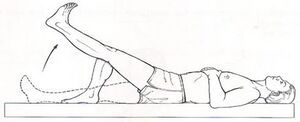
Lumbar Stretches
Physical Therapy Management
Manual therapy procedure (thrust or non-thrust) to diminish pain and improve segmental spinal or lumbopelvic motion
Stretching program using the Global Postural Reeducation (GPR) method showed effective at improving pain, function, some quality of life aspects (emotional, limitations in physical functioning, vitality and mental health) and had no effect on depressive symptoms in patients with chronic low back pain[25].[26]
Low-Impact Aerobic Exercise: Activities like walking, cycling, or swimming can enhance overall fitness and contribute to better back health.
As mobility and pain improve, incorporate more functional, task-specific movements
If the patient's symptoms persist or worsen despite conservative care, referral to a specialist (e.g., orthopedic surgeon or pain specialist) for further investigation might be required.
↑Chapman JR, Norvell DC, Hermsmeyer JT, Bransford RJ, DeVine J, McGirt MJ, Lee MJ. Evaluating common outcomes for measuring treatment success for chronic low back pain. Spine (Phila Pa 1976). 2011 Oct 1;36(21 Suppl):S54-68
↑Macfarlane GJ, Beasley M, Jones EA, Prescott GJ, Docking R, Keeley P, McBeth J, Jones GT; MUSICIAN Study Team. The prevalence and management of low back pain across adulthood: results from a population-based cross-sectional study. Pain. 2012 Jan;153(1):27-32
↑Fanuele JC, Abdu WA, Hanscom B, Weinstein JN. Association between obesity and functional status in patients with spine disease. Spine (Phila Pa 1976). 2002 Feb 1; 27(3):306-12.
↑Laird RA, Kent P, Keating JL. Modifying patterns of movement in people with low back pain -does it help? A systematic review. 2012 Sep 7;13:169. doi: 10.1186/1471-2474-13-169.
↑ 9.09.19.2Sarah Winter et al. Effectiveness of targeted home-based hip exercises in individuals with non-specific chronic or recurrent low back pain with reduced hip mobility. Journal of back and musculoskeletal rehabilitation, 2015
↑ 10.010.1Kent PM, Keating JL. The epidemiology of low back pain in primary care. Chiropr Osteopat. 2005 Jul 26;13:13
↑Nocera J, Buford TW, Manini TM, Naugle K, Leeuwenburgh C, Pahor M, Perri MG, Anton SD. The impact of behavioral intervention on obesity mediated declines in mobility function: implications for longevity. Journal of aging research. 2011;2011.
↑ 12.012.1Anthony D., Steven G., Linda V.D. et al. Low Back Pain clinical practice guidelines linked to the international classification of functioning, disability, and health from the orthopaedic section of the American physical therapy association. Journal of Orthopaedics & Sports Physical Therapy. 2012;42 (4)
↑ 13.013.113.2Delitto A, George S.Z. et al, Low Back Pain Clinical Practice Guidelines Linked to the International Classification of Functioning, Disability, and Health from the Orthopaedic Section of the American Physical Therapy Association. J Orhtop Sports Phys Ther. 2012;42(4):A1-A57
↑Caporaso F, Pulkovski N, Sprott H, Mannion AF. How well do observed functional limitations explain the variance in Roland Morris scores in patients with chronic non)specific low back pain undergoing physiotherapy?. Eur Spine J. 2012 May;21 Suppl 2:S187-95
↑Cherkin DC, Sherman KJ, Balderson BH. Effect of Mindfulness-Based Stress Reduction vs Cognitive Behavioral Therapy or Usual Care on Back Pain and Functional Limitations in Adults With Chronic Low Back Pain. JAMA. 2016 Mar 22-29;315(12):1240-9.
↑Ruiz FK. Bohl DD. Webb ML. Russo GS. MD. Grauer JN. Oswestry Disability Index is a better indicator of lumbar motion than the Visual Analogue Scale. The Spine Journal 14 (2014) 1860–1865
↑ 17.017.1David G.B., Andrei C. Diagnosis and Treatment of acute low back pain. Fast Facts: Low Back Pain. Health Press. 2012
↑Mieritz PM. Bronfort G. Hartvigsen J. Regional Lumbar Motion and Patient REGIONAL LUMBAR MOTION AND PATIENT-RATED OUTCOMES: A SECONDARY ANALYSIS OF DATA FROM A RANDOMIZED CLINICAL TRIAL. Journal of Manipulative and Physiological Therapeutics (2014) Volume 37, Number 9
↑Bauer CM, Rast FM, Ernst MJ. et al. Pain intensity attenuates movement control of the lumbar spine in low back pain, M.J Electromyogr Kinesiol. 2015 Dec;25(6):919-27.[7]
↑ 21.021.1Fritz JM, Whitman JM, Childs JD. Lumbar spine segmental mobility assessment: an examination of validity for determining intervention strategies in patients with low back pain. Arch Phys Med Rehabil. 2005 Sep;86(9):1745-52
↑Kulig K, Powers CM, Landel RF, Chen H, Fredericson M, Guillet M, Butts K. Segmental lumbar mobility in individuals with low back pain: in vivo assessment during manual and self-imposed motion using dynamic MRI. BMC Musculoskelet Disord. 2007 Jan 29;8:8.
↑Consmüller T, Rohlmann A, Weinland D, Druschel C, Duda GN, Taylor WR. Comparative evaluation of a novel measurement tool to assess lumbar spine posture and range of motion. Eur Spine J. 2012 Nov;21(11):2170-80
↑ 24.024.1Casazza B.A. Diagnosis and Treatment of Acute Low Back Pain. American Family Physician.2012;85(4):343-50
↑Lawand P. Lombardi IJ. Jones A. Sardim C. Ribeiro LH. Natour J. Effect of a muscle stretching program using the global postural reeducation method for patients with chronic low back pain: A randomized controlled trial. Joint Bone Spine 82 (2015) 272–277
↑Bonetti F, Curti S, Mattioli S et Al. Effectiveness of a 'Global Postural Reeducation' program for persistent low back pain: a non-randomized controlled trial. BMC Musculoskelet Disord. 2010 Dec 16;11:285.