
Sports Rehabilitation for E-Sports Athletes
Original Editor - Narayani Nagare Top Contributors - Narayani Nagare
Introduction
Electronic sports (E-sports) is a rapidly expanding field where players or teams compete in multiplayer video games using computers or mobile devices.
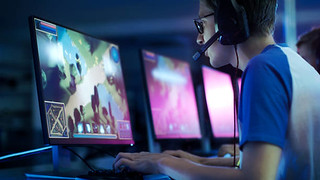

Unlike traditional sports that encourage physical activity, full-time esports athletes often spend between 5.5 to over 10 hours a day seated during training. This extensive screen time is aimed at enhancing eye-hand coordination, quick reaction times, and fast decision-making. However, the high intensity of their training combined with specific postural habits can lead to health risks comparable to those associated with sedentary lifestyles. Research has shown that sitting for 6–8 hours can elevate the risk of all-cause mortality, cardiovascular diseases, and orthopedic injuries resulting from poor posture.
Most studies on esports-related injuries have concentrated on computer gaming, leaving a significant gap in research on mobile esports games. Notably, recent findings indicate that over 90% of millennials prefer mobile devices for gaming, which presents distinct challenges. Mobile gamers exhibit different postures, play in varied environments, and engage with their devices in ways that differ from those using computers. These differences can lead to unique postural adaptations, muscle fatigue, and repetitive injury patterns due to prolonged and intense training.
Professional esports athletes remain seated for long periods, and excessive exposure to blue light from screens can contribute to eye fatigue and potential retinal damage. Prolonged sitting is associated with chronic health issues and premature mortality. Additionally, the weight gain linked to sedentary behaviors in esports players may heighten the risks of cardiovascular diseases and diabetes. Poor sitting posture, combined with unhealthy habits such as smoking and excessive caffeine consumption, can exacerbate musculoskeletal problems—risks that are often correlated with video gaming.
The prolonged postures common in mobile gaming, such as forward head positioning and slouched shoulders, can strain the musculoskeletal system. Reports indicate high incidences of physical issues, including neck (42%), back (42%), wrist (36%), and hand/finger (32%) tendinopathy. Abnormal postures during extended sitting can lead to muscle strain and fatigue, compromising spinal support and increasing stress on ligaments and intervertebral discs, resulting in pain and discomfort. Factors such as repetitive motions and non-neutral postures further contribute to muscle imbalances and strain.
As mobile esports athletes face unique physical demands, understanding these health risks is critical. There is a pressing need for research to establish best practices for musculoskeletal health care within the esports community, particularly given the industry's rapid expansion. The potential health risks associated with high-intensity mobile gaming extend beyond professional players, as the increasing use of mobile devices for communication, entertainment, and work among adolescents and adults has led to a rise in related orthopedic injuries. Investigating the health and musculoskeletal concerns of esports competitors can provide valuable insights for injury prevention and education. Therefore, this study aims to explore the health risks and complaints of full-time elite mobile esports players. [1]
Health Problems faced by E-Athletes
Health problems commonly faced by E-athletes are as follows [2]:
| Body Part | Mechanism | Injury |
|---|---|---|
| Musculoskeletal system | Aberrant sitting prolonged posture | Neck pain |
| “Text neck” syndrome | ||
| Low-back pain | ||
| Radiculopathy | ||
| Gluteal pain | ||
| Hamstring Tightness | ||
| Repetitive movements | Shoulder overuse tendinopathy | |
| Elbow overuse tendinopathy | ||
| Wrist overuse tendinopathy | ||
| Cubital Tunnel Syndrome | ||
| Carpal Tunnel Syndrome | ||
| “Gamer’s thumb” | ||
| Microtrauma | ||
| Ocular system | Long-lasting screen vision | Eye fatigue |
| Dry eyes | ||
| Temporary alterations of visual functions in children | ||
| Virtual reality headset gaming | Alteration in the ocular surface and tear film | |
| Vergence-accommodation conflict | Decreasing vergence ability and accommodative facility | |
| Increased neural plasticity | Increased visual attentional resources in multi-object tracking | |
| Nutrition | Overeating | Weight increase, obesity |
| Energy expenditure, metabolism | Sedentary lifestyle, higher body fat percentage | |
| Wrong alimentation | Nutrients’ deficiency | |
| Increasing use of caffeine and energy drinks | Cardiac arrhythmias | |
| Neurological system | Long-lasting screen vision | Headache |
| Stress | ||
| Insomnia | ||
| Virtual reality headset gaming | “Cybersickness” | |
| Mental Health | Addiction, isolation, several playing hours per game | Gambling |
| Depression | ||
| Stress | ||
| Other psychosocial problems |
Injury Prevention for E-Athletes
Injury prevention strategies for E-Athletes are as follows [2]:
| Stretching routine before and during gaming |
| Strengthening exercise |
| Appropriate posture |
| Appropriate ergonomics |
| Limit continuous gaming |
| Specific eyewear |
| Maintain volumes in an acceptable range |
| Adequate level of physical fitness |
| Adequate level of caloric and water intake |
| No excessive use of caffeine and energy drinks |
| Prefer healthy social interactions and team building |
| Relaxation techniques and meditation |
| Anxiety and stress control |
Exercise Recommendations for E-Athletes
Exercise protocol for E-Athletes may include a warm up protocol, followed by an injury-prevention protocol and finally a cool-down protocol.
Esports Warm-Up Protocol Suggestions [3]
| Warm-up | |
|---|---|
| Exercise characteristics | Examples |
| Aerobic—low intensity | • Marching on the spot with arm swings.
• Light jog (indoors, outdoors, on a treadmill ... . ). • Cycling (indoors, outdoors, on a stationary bike ... . ). • Activities that use the bodyweight: jumping jacks, burpees ... . |
| Stretching | • Head turns and drops.
• Arm circles (forward and backward). • Forearms rotations. • Forming a fist and spreading the fingers. |
| Sport-specific activities | • Solve crossword puzzles while lightly riding on a stationary bike or light jogging (cognitive skills + cardio activity).
• Juggling with beanbags or balls (start with one then slowly start adding three or more). Variation: change in execution speed in response to an acoustic stimulus (eye–hand coordination + reaction time). • Lights hand touch (players have to touch the lights in response to an acoustic or visual stimulus; reaction time + cognitive skill). • Playing the game in which the player will compete in an easier environment (i.e., friendly matches, minigames from the actual game ... . ). • Breathing exercises, visualization exercises, or strategies to improve mood. |


Esports Injury Prevention Protocol Suggestions[3]
| Injury prevention | ||
|---|---|---|
| Muscle/body part | Strengthening | Flexibility |
| Trunk | Suitcase carry
Dead bugs |
Cat-cow
Knee to chest stretch |
| Back | Pull ups
Barbell row |
Child’s pose stretch
Cobra stretch |
| Shoulder girdle | Overhead press
Hands to elbows plank |
Cross-body arm swings
Cross-body shoulder stretch |
| Neck | Holding a neutral neck position while having a resistance band pulling toward a direction (forward, backward, sideway ... . ) | Neck side, forward, and back bends
Neck rotations |
| Pectoral | Dumbbell fly
Dumbbell pullover |
Corner pectoral stretch
Lacrosse/tennis (hard) ball rolling |
| Arm | Biceps curl
Eccentric triceps extension |
Dynamic elbow extension/flexion
Overhead triceps stretch |
| Forearm/wrist | Standing wrist extensions/flexions with weightlifting plates
Barbell reverse curls |
Wrist rotations
Wrist flexors and extensors stretch |
| Hand | Fingers spread with resistance (i.e., elastic band)
Squeezing a foam ball |
Crossed fingers stretch
Dynamic fingers extension/flexion |
Esports Cooldown Protocol Suggestions[3]
| Cooldown examples |
|---|
| • Play in a soft, simple, and slow way (i.e., cooldown matches with the teammates or AI).
• Gentle static stretches (similar exercises to those defined in “flexibility exercises”), followed by a 1-min hold of a posture in which the body and arms are allowed to fall forward while sitting or standing with feet wide apart (i.e., looking for a lengthen feeling in the muscles of the lower back). • Breathing slowly in a seated or lying position while quietly thinking about what was done. |


Esports Active Breaks Protocol Suggestions[3]
| Active breaks | |||
|---|---|---|---|
| Exercise complexity | Activity | Requirements | |
| Low (6 min) | • High-intensity interval training (running, burpees, jumping jacks, cycling ... . ).
• Calisthenics (pushups, planks, squats ... . ). • Flexibility and mobility exercises (they could be the same as in the injury prevention program) combined with breathing and relaxation exercises. |
Time | + |
| Equipment | + | ||
| Preparation | + | ||
| Medium (6–15 min) | • Brief continuous aerobic exercise (running, cycling, walking ... . ).
• Brief resistance training circuit (bench press, barbell rows, barbell back/front squat ... . ). • Brief games that promote movement, individually or in groups (Twister, do not let a balloon touch the ground, mirroring someone moving [i.e., a teammate or a video] ... . ). |
Time | ++ |
| Equipment | ++/+++ | ||
| Preparation | ++/+++ | ||
| High (>15 min) | • Moderate duration continuous aerobic exercise (running, cycling, walking ... .).
• Moderate duration resistance training circuit (bench press, barbell rows, barbell back/front squat ... .). • Moderate duration games that promote movement, individually or in groups (Twister, do not let a balloon touch the ground, mirroring someone moving [i.e., a teammate or a video] ... .). |
Time | +++ |
| Equipment | ++/+++ | ||
| Preparation | +++ | ||
This One-Minute Hand and Wrist Exercise Program can be performed while gaming to relieve pain due to prolonged loading of joints. It should be performed once every 1-2 hours.
References
- ↑ Lam, WK., Liu, RT., Chen, B. et al. Health Risks and Musculoskeletal Problems of Elite Mobile Esports Players: a Cross-Sectional Descriptive Study. Sports Med - Open 8, 65 (2022). https://doi.org/10.1186/s40798-022-00458-3
- ↑ 2.0 2.1 Rossoni, Agostino et al. “The eSports Medicine: Pre-Participation Screening and Injuries Management-An Update.” Sports (Basel, Switzerland) vol. 11,2 34. 1 Feb. 2023, doi:10.3390/sports11020034
- ↑ 3.0 3.1 3.2 3.3 Baena-Riera.Piedra.Pena˜.Exercise Recommendations for e-Athletes: Guidelines to Prevent Injuries and Health Issues.Carrani Journal of Electronic Gaming and Esports, 2023;1:1-9. https://doi.org/10.1123/jege.2023-0003