When refering to evidence in academic writing, you should always try to reference the primary (original) source. That is usually the journal article where the information was first stated. In most cases Physiopedia articles are a secondary source and so should not be used as references. Physiopedia articles are best used to find the original sources of information (see the references list at the bottom of the article).
If you believe that this Physiopedia article is the primary source for the information you are refering to, you can use the button below to access a related citation statement.
One of the most cutting-edge areas of research involves the communication between brain, gut and skeletal muscle which plays a key role in energy homeostasis of the body and has potentially huge influence over our health[1][2]. The gut-brain axis i.e. the connection between the brain, gut, and microbiome; and the gut-muscle axis is the connection between our muscles and the gastrointestinal system. This connection plays an important role in staying healthy and preventing disease. The gastrointestinal (GI) tract contains trillions of microorganisms, including bacteria, fungi, and viruses, that coexist in a symbiotic relationship with the host. Research indicates that the gut microbiota plays a critical role in regulating metabolic, endocrine, and immune functions[3]. The influence of the microbiota extends beyond the GI tract, affecting key brain processes. This has led to the development of the microbiota-gut-brain axis concept.The bidirectional communication network includes the central nervous system (CNS), both brain and spinal cord, the autonomic nervous system (ANS), the enteric nervous system (ENS) and the hypothalamic pituitary adrenal (HPA) axis.
Gut Microbiota
Gut microbiota is an assortment of microorganisms inhabiting the length and width of the mammalian gastrointestinal tract. The composition of this microbial community is host specific, evolving throughout an individual's lifetime and susceptible to both exogenous and endogenous modifications. A newborn is first exposed to the mother’s vaginal microbiota which influences the offsprings microbial signature. Studies show that the gut microbiota is central to the development and maturation of the human CNS and ENS in these early postnatal weeks.[4]
Estimates of the number of bacterial species present in the human gut vary widely between different studies, but it has been generally accepted that it contains ∼500 to 1,000 species.
It is estimated that the human microbiota is 10 times greater than the number of human cells present in our bodies. The microbiota colonizes virtually every surface of the human body that is exposed to the external environment eg on our skin and in the genitourinary, gastrointestinal, and respiratory tracts. The most heavily colonized organ is the gastrointestinal tract (GIT); the colon is estimated to contain over 70% of all the microbes in the human body.
The human gut has an estimated surface area of a tennis court (200 m2) and, as such a large organ, represents a major surface for microbial colonization and the GIT is rich in molecules that can be used as nutrients by microbes, making it a preferred site for colonization.
The overall balance in the composition of the gut microbial community, as well as the presence or absence of key species capable of effecting specific responses, is important in ensuring homeostasis or lack thereof at the intestinal mucosa and beyond.
The majority of the gut microbiota is composed of strict anaerobes, which dominate the facultative anaerobes and aerobes by two to three orders of magnitude. There have been over 50 bacterial phyla described to date with the human gut microbiota being dominated by only 2 of them: the Bacteroidetes and the Firmicutes.[5]
Production of Microbial Metabolites: Many species of Lactobacillus and Bifidobacterium produce gamma-aminobutyric acid (GABA), which is the main inhibitory neurotransmitter in the brain. Other bacteria have been shown to produce the neurotransmitters serotonin and dopamine. Bacteria also produce short-chain fatty acid that are able to stimulate sympathetic nervous system, mucosal serotonin release and thus influence the memory and learning process in the brain.
Gut microbiota can regulate host tryptophan levels, which is a main serotonin precursor. Peripherally, serotonin is involved in the regulation of GI secretion, motility (smooth muscle contraction and relaxation), and pain perception, whereas in the brain serotonin is implicated in regulating mood and cognition[6]. A dysfunctional serotonergic system is considered to be one of the main factors contributing to the development of depression (approximately 95% of Serotonin is produced by cells in the gut mucosal).
Gut Brain Link
The gastrointestinal tract exerts influence on brain function, and vice versa.[7] The gut microbiota communicates with the brain in variety of ways. The two-direction communication system between the gut and the central nervous system (CNS) is mediated by the enteric nervous system (ENS), vagus nerve, immune pathways, and endocrine signaling[8]. It involves:
The visceral information is transmitted to CNS via spinal and cranial nerves. Visceral information is transmitted via the spinal carry the nociceptive, thermic, osmoreceptor, and metaboreceptor signals to the posterior and middle insular regions (primary interoceptive cortex) and then the anterior insular region, where they integrate with higher-order information before being transmitted to the prefrontal cortex. The insular cortex is the primary brain region for interoception[8]. Vagus and glossopharyngeal nerves carry inputs to and cranial pathways to the nucleus of the solitary tract (NST) which plays significant roles in feeding and social behavior.
Microbial metabolites (SCFA) [9]play an important role in regulating the physiology and behavior of the central nervous system. SCFAs interact with receptors on enteroendocrine cells to secrete glucagon-like peptide 1, which indirectly send signals to the brain through the systemic circulation or vagus-nerve pathway[1]. SCFA affect the blood brain barrier integrity, regulates the growth and development of neurons and synapses, in the brain affect the morphology and function of microglia, regulate neurotrophic factor levels, increase neurogenesis, promote serotonin biosynthesis, and improve neuronal homeostasis and function to influence neuroinflammation.[1] The gut-brain communication is seen with the digestion and satiety.
The gut and the brain links:
The gastrointestinal tract is connected to the brain through the Vagus nerve. The vagus nerve links the heart, gastrointestinal tract, and lungs to the brain (like a cable that links the heart, gastrointestinal tract and lungs to the brain). Sensory neurons carry feedback from the intestinal end to the brain stem which then engages the hypothalamus (which is a brain region that controls hunger and emotions) and limbic system (the emotional nervous system). Similarly, descending projections from the limbic system (activated via stress) influence autonomic activity of the gut.
Bacterial products stimulate neuroendocrine (gut hormone) signalling. Neuropeptides are the most diverse class of signaling molecules in the brain engaged in many physiological functions). These neuropeptides then enter the bloodstream and/or directly influence the enteric nervous system.
The gut associated lymphoid tissue comprises 70% of the body’s immune system and can be conceptualised as the largest immune organ in the body.
Gut Muscle Axis
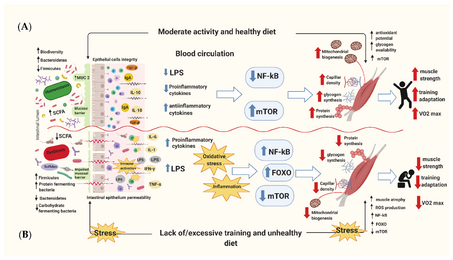
The gut–brain axis is bidirectional communication system between enteric microbes and the CNS. Skeletal muscle creates a triad[10]. In addition to producing movement, skeletal muscles secrete myokines and other exercise-induced factors (exerkines) that influence the gut microbiota and the nervous system via the bloodstream, thereby regulating brain function and metabolic homeostasis.[11]The gut-muscle axis is involved in some muscle physiological processes, including nutrient uptake, energy homeostasis, and control of inflammation and immunity, all critical to the integrity of healthy muscle tissue. Changes in the intestinal microbiota, or dysbiosis, have been linked with muscle wasting diseases such as sarcopenia (age-related loss of muscle mass) and sepsis-induced myopathy.Understanding this axis provides potential avenues for the generation of new strategies or for updating present interventions for the prevention and treatment of muscle disorders during life.[1]
Short-chain fatty acids (SCFAs) are small organic monocarboxylic acids are the the main metabolites produced in the colon by anaerobic fermentation of indigestible polysaccharides such as dietary fiber and resistant starch [3].
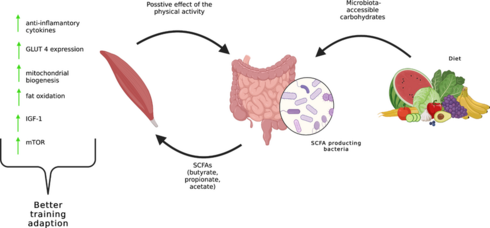
The intestinal microbiota produce (SCFAs) (e.g., acetate, propionate, and butyrate) that are absorbed and can modulate metabolism across the body, including skeletal muscle. SCFAs can:
Provide a maximum of 10% of daily energy needs. Mice experiments suggest that SCFAs can increase endurance during exercise, suggesting an influence on muscle energy supply.
Trigger hormone signals by secondary bile acids (SBAs)
Regulate mitochondrial function and mitochondrial genesis in skeletal muscle
Modulate glucose and lipid metabolism.(Butyrate)
Acetate is available for use by skeletal muscle cells to produce ATP.
Effect on Glucose Homeostasis and Insulin Sensitivity:[1]
SCFAs may be able to modify glucose metabolism in skeletal muscle and to maintain insulin sensitivity. Therefore, SCFAs may promote glucose homeostasis by triggering pathways to stimulate insulin secretion.
Intestinal barrier disruption can lead to translocation of bacterial lipopolysaccharides (LPS) into systemic circulation, possibly reducing muscle insulin sensitivity.
SCFAs play a role in lipid metabolism in skeletal muscle. Butyrate increases lipolysis. Bile acids not only regulate lipid and glucose metabolism but also suppress muscle deposition of fat.
Influence on Amino Acid Metabolism and Protein Synthesis:[2]
The gut microbiota can modify the presence of dietary protein and certain amino acids like tryptophan (that control inflammation and synthesize muscle protein). Dysregulation can lead to disrupted absorption of amino acids, damaging muscle anabolism.
Interaction between brain, gut, and skeletal muscle, controlled by SCFAs and bile acids, plays a role in overall energy homeostasis as well as feeding behavior.
Role in Disease prevention
Prevention of Sepsis and Complications: A balanced gut microbiota acts as an important first line of defense against pathogens that can relocate and start systemic infections. Microbiota enhance immunity when compete with the pathogen for nutrients, produce antibacterial peptides so eliminate pathogens and ensure intestinal epithelial integrity when facilitating mucus secretion. Dysbiosis can lead to predisposition to severe infection and sepsis. This was proved by treating sepsis with therapies like fecal microbiota transplantation (FMT) in animal models. [1]
Mitigation of Chronic Inflammatory Diseases: Dysbiosis has the ability to enhance intestinal permeability, allowing bacteria and their products (e.g., LPS) into the bloodstream and intensifying subclinical and systemic inflammation, which is implicated in numerous chronic diseases. SCFAs, particularly butyrate, produced by gut microbiota, play important roles in reducing intestinal inflammation by producing anti-inflammatory metabolites, sustaining the intestinal barrier integrity, and regulating intestinal homeostasis therefore, suppressing the onset or advancement of inflammatory disease such as inflammatory bowel disease and perhaps also systemic diseases.[1]
Resisting Age-Associated Muscle Wasting (Sarcopenia) and having frailty: The gut-muscle axis becomes increasingly involved in skeletal muscle aging. Age-related dysbiosis is associated with increased gut permeability and systemic inflammation, resulting in sarcopenia. A normal gut microbiota and its metabolic functions can play a role in maintaining muscle mass and function during aging. For instance, SCFAs may exert positive effects on muscle metabolism and mitochondrial function, which are critical in preventing sarcopenia.[1]
Possible Contribution to Prevention of Metabolic Disorders: The gut microbiota is involved in energy metabolism, glucose homeostasis, and lipid metabolism. SCFAs improve the sensitivity of skeletal muscle to insulin and the uptake of glucose. Dysbiosis is correlated with metabolic endotoxemia and insulin resistance. A stable gut microbiota and a well-functioning gut-muscle axis can make a possible contribution to the prevention of metabolic disorders like type 2 diabetes and obesity by controlling energy balance and improving metabolic parameters. For example, FMT from exercised mice lowered metabolic parameters in obese mice, suggesting that the healthy gut microbiome could have positive impacts on metabolic function.[12]
Modulation of the Gut-Brain Axis and Neurodegenerative Diseases: Not muscle-related per se, the sources mention the influence of gut microbiota on the brain (gut-brain axis) and potential participation in neurodegenerative disease like Parkinson's. As systems in the body are interconnected, a healthy environment in the gut made possible through an effective gut-muscle axis could secondarily contribute to overall health and potentially affect risk for such disease by enabling correct systemic balance and reducing inflammation.[12]
Impact on Cancer Cachexia: Dysbiosis of gut microbiota has been reported in cachectic cancer patients (muscle wasting). Some bacterial metabolites could be involved in muscle atrophy in cachexia. Maintenance of the gut microbiome could prevent the development and severity of cancer cachexia-induced muscle wasting. Experimental evidence in animal models suggests that probiotics can inhibit cachexia by reducing systemic inflammation.[12]Influence on Muscular Dystrophies: Alteration of gut microbiota and intestinal permeability have been suggested to play a role in the initiation of muscle degeneration by immune-mediated inflammation in Duchenne Muscular Dystrophy (DMD). Maintaining gut barrier function and an intact microbiota could be beneficial in retarding the progression of muscle pathology in DMD.[12]
Therapeutic Interventions for Disease Prevention:[12]
Dietary Modifications: The consumption of diets rich in fermentable fibers (prebiotics) will promote the growth of healthy bacteria and the production of SCFAs.
Probiotic Supplementation: Supplementation with beneficial live microorganisms (probiotics) may restore gut microbial balance and yield positive health effects. However, the safety and efficacy of probiotics should receive proper consideration, especially in vulnerable populations.
Fecal Microbiota Transplantation (FMT): Fecal microbiota transfer from a healthy donor to a patient with dysbiosis has been promising in the treatment of certain conditions and the normalization of gut health.
Exercise: Physical activity may influence the gut microbiota composition and promote overall metabolic health, potentially improving the gut-muscle axis and disease prevention.
Optimizing GMA
Dietary Interventions: Boost Fiber Intake (Prebiotics): Diet high in dietary fibers stimulates the growth of beneficial gut bacteria. Gut bacteria ferment the fibers to release short-chain fatty acids (SCFAs) like acetate, propionate, and butyrate, which have numerous beneficial effects on the gut and muscles. SCFAs have the ability to increase glucose homeostasis and insulin sensitivity in skeletal muscle, regulate inflammation, and increase muscle protein anabolism. Even prebiotic supplementation has been shown to increase grip strength in the elderly.[13] Take into consideration Polyphenols: Polyphenols in diet, present in fruits and vegetables, are broken down by gut microbiota to produce compounds with the ability to have positive effects on muscle. Endurance exercise can even increase the bioavailability of dietary polyphenols.[14] Supply Sufficient Protein: While the majority of dietary amino acids are taken up in the small intestine, the gut microbiota are responsible for their metabolism and bioavailability. Sufficient protein supply supplies the precursors for muscle protein synthesis, and a healthy gut microbiota will optimize amino acid utilization.[15] Butyrate Supplementation: The animal model evidence suggests that butyrate, the most significant of the SCFAs, can prevent muscle atrophy, preserve muscle weight, reduce indices of oxidative stress and apoptosis in muscle, and even promote mitochondrial biogenesis in muscle. Maternal dietary supplementation benefits in offspring muscle growth are also evidenced.
Exercise Strategies:[15] Regular Moderate Exercise: Positively affects gut microbiota composition and diversity and promotes muscle function and health. Exercise can trigger a more metabolically beneficial gut microbiota. Endurance Exercise: Can effectively regulate gut microbiota and promote their metabolite production, which could improve biosynthesis and mitochondrial homeostasis. Furthermore, it can improve aerobic function and energy utilization in skeletal muscle. Resistance Exercise: Can improve mitochondrial adaptation, increase muscle hypertrophy and size, and increase muscle fiber and motor unit recruitment. Avoid Excessive Exercise: Excessive exercise leads to overtraining that can cause gut dysbiosis, intestinal hyperpermeability, and inflammation, eventually exerting a negative impact on muscle function. Maintaining the proper balance of exercise volume and intensity is extremely critical to maximize the gut-muscle axis.
Microbial Interventions[16] Probiotic Supplementation: Some probiotic species (e.g., Lactobacillus, Bifidobacterium, Faecalibacterium prausnitzii) show promise in improving muscle mass and function in animal models. They also have the potential to reduce inflammation and improve insulin sensitivity. Clinical trial evidence in humans is yet to be established. Prebiotic Supplementation: By selective ingestion of beneficial gut microbiota, prebiotics contribute indirectly to muscle health by the production of SCFAs and other beneficial metabolites. Prebiotics have the potential to reduce LPS levels and inflammation and stimulate higher skeletal muscle mass in animal models. Synbiotics: The symbiotic association of probiotics and prebiotics (synbiotics) may offer maximum benefit for modulation of gut microbiota and consequent modulation of the gut-muscle axis. Fecal Microbiota Transplantation (FMT): FMT from healthy donors in animal models has shown promise in augmenting strength and mass of muscles, reconstituting gut barrier integrity, and enhancing mitochondrial function in muscles, even during conditions of aging and sepsis. But human clinical trials have to take extremely careful consideration of both safety and efficacy.
Regulating Inflammation and Intestinal Barrier Function[17] Reduce Intestinal Permeability: Interventions that promote a healthy gut microbiota, such as a high-fiber diet and avoiding over-exercise, can maintain the integrity of the intestinal barrier. A compromised barrier allows toxic microbial products like lipopolysaccharide (LPS) to enter the bloodstream, leading to systemic inflammation and potentially harming muscle function and insulin sensitivity. Support Anti-inflammatory Microbial Metabolites: The production of anti-inflammatory metabolites by bacteria such as butyrate and indole-3-propionic acid (IPA) can be supported to create a less inflammatory environment for both gut and muscles.
Sarcopenia and GMA
Gut Microbiota Changes in Aging and Sarcopenia:
Reduced Diversity: Advancing age is often characterized by a decrease in gut microbiota diversity. This reduction in diversity has also been observed in sarcopenic individuals.[18]
Specific Microbial Shifts: Compared to healthy individuals, sarcopenic patients may exhibit increased proportions of Firmicutes and Enterobacteriaceae and decreased Bacteroidetes, Bifidobacterial, and Roseburia. Studies also indicate a reduction in SCFA-producing bacteria like those in the Lachnospiraceae family (Lachnospira, Fusicatenibacter, Roseburia, and Lachnoclostridium) in age-related sarcopenia. Similarly, lower levels of Coprobacillus, Catenibacterium, and Clostridium, and higher levels of Bacteroides have been noted in individuals with lower muscle mass.[19]
Frailty and Gut Microbiota: Increased having frailty in older adults is associated with lower levels of butyrate-producing organisms, higher levels of dysbiotic species, and increased LPS and peptidoglycan biosynthesis. A sharp decline in Lactobacilli, F. prausnitzii, and the Bacteroides/Prevotella ratio, along with an increase in Enterobacteriaceae, has also been observed in frail elderly individuals.[18]
The Role of Microbial Metabolites, Especially SCFAs:
SCFA Production and Muscle Health: Gut bacteria ferment dietary fibers to produce short-chain fatty acids (SCFAs), including acetate, propionate, and butyrate. These SCFAs play a crucial role in the gut-muscle axis.
Reduced SCFAs in Sarcopenia: Muscle loss is related to a reduction of SCFA-producing bacteria, leading to decreased SCFA production. This suggests a link between SCFA deficiency and muscle strength impairment.
Benefits of SCFAs for Muscle: SCFAs can stimulate hormone signals that regulate mitochondrial function. They play an active role in the metabolism of lipids, carbohydrates, and protein in skeletal muscle. SCFAs can also affect glucose and lipid metabolism by increasing the phosphorylation of AMPK and PGC1α. Furthermore, they can increase insulin sensitivity in skeletal muscle by increasing the expression of IRS1 and phosphorylation of PKB.[18]
Experimental Evidence with SCFAs: Feeding sterile mice with mixed SCFAs can increase muscle weight and limb grip strength and reduce the expression of atrogin1 (a muscle atrophy marker). Long-term administration of butyrate to aged mice can prevent hind limb muscle atrophy, protect muscle weight, and reduce oxidative stress and apoptosis markers. A decrease in fecal butyrate has been significantly correlated with a reduction in skeletal muscle mass index.[18]
Inflammation and Intestinal Permeability:
Dysbiosis and Inflammation: Gut microbiota dysbiosis can contribute to increased intestinal permeability. This allows the passage of endotoxin (like LPS) and other microbial products into the circulation, potentially leading to systemic chronic inflammation.[18]
Inflammation as a Sarcopenia Factor: Chronic inflammation is a significant factor associated with sarcopenia. Increased intestinal permeability and elevated blood LPS levels have been correlated with sarcopenia and systemic weakness in the elderly.[18]
LPS and Muscle Atrophy: Circulating LPS can activate Toll-Like Receptors (TLR) in skeletal muscle cells, promoting protein catabolism and inflammatory cytokine production, potentially leading to muscle atrophy.
Potential Interventions Targeting Gut Microbiota:
Prebiotics and Probiotics: Supplementation with prebiotics (like 1-kestose) has shown potential to increase beneficial bacteria (Bifidobacterium longum) and improve skeletal muscle mass index. Probiotic supplementation (Lactobacillus and Bifidobacterium strains) has demonstrated the ability to reduce muscle atrophy markers and increase muscle mass and strength in animal studies. Synbiotic supplementation in critically ill patients has been reported to potentially reduce muscle protein catabolism.
Fecal Microbiota Transplantation (FMT): FMT from young rats to aged recipients has shown promise in alleviating age-related sarcopenia by preserving gut barrier integrity and enhancing muscle mitochondrial function.
Diet and Gut Microbiota: Diet significantly impacts gut microbiota composition. A diet rich in dietary fiber promotes beneficial gut bacteria and SCFA production, which are beneficial for muscle health.
Exercise and Gut Microbiota: Exercise can modulate the host gut microbiota and improve skeletal muscle function. Regular physical exercise can reduce inflammation and promote health by changing the gut microbiota. Aerobic exercise can increase SCFA content in feces.[20]
↑Rege S, Graham J. The Simplified Guide to the Gut-Brain Axis—How the gut and the brain talk to each other. Psych Scene Hub. 2017.
↑Sekirov I, Russell SL, Antunes LC, Finlay BB. Gut microbiota in health and disease. Physiological reviews. 2010 Jul 1.
↑Lukić I, Getselter D, Koren O, Elliott E. Role of tryptophan in microbiota-induced depressive-like behavior: evidence from tryptophan depletion study. Frontiers in behavioral neuroscience. 2019 Jun 4;13:123.
↑Cryan JF, O'Riordan KJ, Cowan CS, Sandhu KV, Bastiaanssen TF, Boehme M, Codagnone MG, Cussotto S, Fulling C, Golubeva AV, Guzzetta KE. The microbiota-gut-brain axis. Physiological reviews. 2019 Oct 1;99(4):1877-2013.
↑Taslim NA, Sibarani JN, Alfaray RI, Mayulu N, Mustika A, Kumalawati DA, Permatasari HK, Tjandrawinata RR, Nurkolis F. The Gut–Brain–Muscle Axis: Microbial Regulation of Neuromuscular Aging and Cognitive Frailty. Microorganisms. 2026 Jun 19;14(6):1366.
↑ 12.012.112.212.312.4Chew W, Lim YP, Lim WS, Chambers ES, Frost G, Wong SH, Ali Y. Gut-muscle crosstalk. A perspective on influence of microbes on muscle function. Frontiers in Medicine. 2023 Jan 9;9:1065365.
↑Frampton et al. (2020): Frampton J, Murphy KG, Frost G, Chambers ES. Short-chain fatty acids as potential regulators of skeletal muscle metabolism and function. Nat Metab. 2020;2:840–8.
↑Hong et al.: Hong Y, Lee JH, Jeong KW, Choi CS, Jun HS. Amelioration of muscle wasting by glucagon-like peptide-1 receptor agonist in muscle atrophy. J. Cachexia Sarcopenia Muscle. 2019;10:903–18.
↑ 15.015.1Liu et al.: Liu H, Xi Q, Tan S, Qu Y, Meng Q, Zhang Y, et al. The metabolite butyrate produced by gut microbiota inhibits cachexia-associated skeletal muscle atrophy by regulating intestinal barrier function and macrophage polarization. Int Immunopharmacol. 2023;124:111001.
↑Lahiri et al. (2019): Lahiri S, Kim H, Garcia-Perez I, Reza MM, Martin KA, Kundu P, et al. The gut microbiota influences skeletal muscle mass and function in mice. Sci Transl Med. 2019;11:eaan5662.
↑Mo et al. (2023): Mo X, Shen L, Cheng R, Wang P, Wen L, Sun Y, et al. Faecal microbiota transplantation from young rats attenuates age-related sarcopenia revealed by multiomics analysis. J. Cachexia Sarcopenia Muscle. 2023;14:2168–83.
↑ 18.018.118.218.318.418.518.6Zhao J, Huang Y, Yu X. A narrative review of gut-muscle axis and sarcopenia: The potential role of gut microbiota. International Journal of General Medicine. 2021 Apr 13:1263-73.
↑Liu Y, Xu L, Yang Z, Wang D, Li T, Yang F, Li Z, Bai X, Wang Y. Gut-muscle axis and sepsis-induced myopathy: The potential role of gut microbiota. Biomedicine & Pharmacotherapy. 2023 Jul 1;163:114837.
↑Li T, Yin D, Shi R. Gut-muscle axis mechanism of exercise prevention of sarcopenia. Frontiers in Nutrition. 2024 Aug 16;11:1418778.