
Understanding the Categories of Wheelchair and Seating Systems
Top Contributors - Stacy Schiurring and Jess Bell
Introduction
Effective wheelchair provision requires clinicians to understand the landscape of available equipment, including what it is designed to do, for whom, and under what clinical circumstances it is appropriate. This is not simply a matter of product familiarity. It requires clinicians to think critically about the relationship between a person's needs and the features of available devices.
General Mobility Equipment vs Complex Rehabilitation Technology
A foundational skill in wheelchair provision is recognising when a straightforward, off-the-shelf solution is appropriate and when a fully individualised, clinician-prescribed system is required. These two broad categories are commonly referred to as General Mobility Equipment (GME, also called Durable Medical Equipment, or DME, particularly in North American contexts) and Complex Rehabilitation Technology (CRT).
GME is pre-configured and mass-produced, intended for short-term or basic mobility needs. CRT is individually configured for people with complex, long-term, or progressive needs. The distinction is not primarily about cost; it is about clinical rationale and individualisation. CRT requires a comprehensive evaluation by a qualified clinician and ongoing reassessment over time.[1] The goal in both cases is the same: the right equipment for the right person at the right time.
| Feature | General Mobility Equipment (GME/DME) | Complex Rehabilitation Technology (CRT) |
|---|---|---|
| Configuration | Pre-configured and mass-produced | Individually measured and configured |
| Adjustability | Minimal: limited to a few fixed sizes | High: seat depth, width, axle position, back angle, centre of gravity, and more |
| Intended duration | Short-term or temporary use | Long-term and often lifelong |
| Clinical evaluation required | Not typically required (though recommended) | Required: comprehensive assessment and clinical reasoning |
| Postural support | Minimal | Integrated and customisable positioning supports |
| Pressure distribution | Limited | Addressed through individualised seating prescription |
| Growth/change accommodation | Limited | Adjustable or upgradeable over time |
| Typical user profile | Temporary or basic mobility need (e.g. post-surgical, short transport) | Neurological diagnosis, progressive condition, skin integrity risk, high postural support needs, shoulder preservation concerns |
When GME is used beyond its intended scope, clinical risks include poor pressure distribution, reduced propulsion efficiency and increased upper limb strain,[2] inadequate postural support, and limited capacity to accommodate changes in the user's condition over time. The WHO notes that poorly matched mobility equipment carries measurable downstream health consequences.[1]
Seating Systems
A wheelchair has two core components: the frame and the seating system. The frame provides mobility; the seating system determines how the user is supported within the frame.
A seating system encompasses the seat cushion, back support, and any additional positioning components. Every element of the system interacts with the others (e.g. a change to the cushion affects pelvic position, which affects trunk alignment, which affects head position). Clinical decision-making must account for the system as a whole, not its individual parts in isolation.
Like wheelchairs, seating systems range from basic off-the-shelf products to fully custom-moulded solutions. For users with complex needs who qualify for CRT, some degree of customisation is almost always required. The appropriate level of customisation is determined through clinical assessment.
Seat Cushions
Seat cushions address pressure redistribution, postural stability, comfort, and microclimate management. No single cushion type optimises all of these properties simultaneously,[3] which is why individualised assessment is essential. Cushion selection is not a one-time decision; clinical review and adjustment over time are necessary as the user's needs change.[4]
| Category | Construction | Primary Clinical Indication | Selection Considerations |
|---|---|---|---|
| Foam | Single or layered foam (varying densities) |
|
|
| Gel/viscous fluid | Gel or fluid-filled cells within a foam base |
|
|
| Air-filled (flotation) | Interconnected air cells |
|
|
| Alternating pressure/dynamic | Powered cells that cycle inflation |
|
|
| Contoured/pre-contoured | Pre-shaped foam or composite materials | Moderate-to-high postural support needs with moderate pressure risk | Off-the-shelf option offering more postural support than flat foam; postural stability is enhanced by contoured surfaces |
| Custom-moulded | Individually shaped to the user's body via simulation or direct moulding | High postural support needs; complex pelvic or lower limb presentations; high pressure risk | CRT-level prescription; requires specialist assessment; highest cost; not adjustable once moulded |
Back Supports
Back supports provide spinal alignment, trunk stability, and comfort. The appropriate level of support depends on the user's degree of trunk control, the presence of spinal deformity, respiratory considerations, and functional goals. Sling upholstery, which is standard on basic and transport wheelchairs, provides minimal support and is not appropriate for long-term CRT users.[5]
| Category | Description | Primary Clinical Indication |
|---|---|---|
| Sling upholstery | Standard fabric sling attached to the wheelchair frame |
|
| Planar (flat) back support | Firm, flat padded surface mounted to the chair |
|
| Contoured back support | Pre-shaped lateral and lumbar contouring |
|
| Custom-moulded back support | Individually shaped to the user's trunk |
|
Additional Positioning Components
For users with more complex needs, a seating system may also include lateral trunk supports, pelvic positioning belts, headrests, footrests, leg supports, arm troughs, and anterior trunk supports. These components are what typically signal that a seating system has moved from GME into CRT territory. Each component must be selected as part of the whole system, not in isolation.
Categories of Manual Wheelchairs
Manual wheelchairs span a wide spectrum from basic transport devices to high-performance, ultralight systems. The key clinical differentiator across categories is the degree of adjustability and the extent to which a chair can be configured precisely for an individual user.
| Category | Key Features | Typical User Profile | GME or CRT |
|---|---|---|---|
| Transport/attendant chair |
|
|
GME |
| Standard manual wheelchair |
|
|
GME |
| Lightweight/mid-range manual wheelchair |
|
|
GME to CRT transition; varies by product |
| Ultralight manual wheelchair |
|
|
CRT |
| Tilt-in-space manual wheelchair |
|
|
CRT |
| Recline manual wheelchair | Backrest reclines independently of seat | Users requiring catheterisation, pressure relief via recline, or lower limb extension needs | GME |
| Paediatric manual wheelchair |
|
|
CRT |
| Bariatric manual wheelchair |
|
Users whose weight or dimensions exceed standard chair ratings | GME or CRT depending on clinical complexity |
| Sports/activity-specific chair |
|
Active users participating in sport or specific recreational activities | Other; typically self-funded or sport-body funded |
-
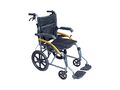 Transport wheelchair
-
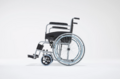 Standard manual wheelchair
-
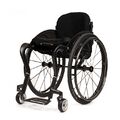 Ultralight manual wheelchair
-
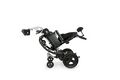 Tilt-in-space manual wheelchair
-
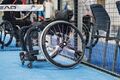 Sports wheelchair


A key differentiator of CRT manual wheelchairs is the ability to adjust axle position relative to the user's shoulder. Research consistently demonstrates that optimal axle position reduces the energy cost of propulsion, improves stroke efficiency, and reduces peak forces on the shoulder joint, supporting long-term upper limb preservation.[2][7] This level of configurability is not available on standard or fixed-frame GME chairs.
Power Assist and Power Add-On Systems
Power assist and power add-on systems occupy the space between manual and full power wheelchairs, augmenting the user's own propulsion effort rather than replacing it.
Power assist systems are integrated into the rear wheels. The user propels normally; sensors detect the applied force and provide a proportional motor boost, reducing physical demand without removing the user's active role.
Power add-on devices attach to an existing manual wheelchair frame, adding a powered component, most commonly a front-mounted motorised wheel. These can typically be removed, allowing the chair to be used manually.
| Feature | Power Assist (e.g. powered rear wheels) | Power Add-On (e.g. front-wheel drive attachment) |
|---|---|---|
| Integration |
|
|
| User control | Sensor-driven, user pushes, motor amplifies | Joystick or tiller control (varies by device) |
| Manual propulsion retained | Yes | Partially, depends on device |
| Primary clinical indication |
|
|
-
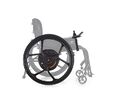 Power assist drive with joystick
-
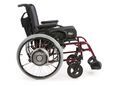 Power assist rims
-
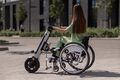 Power assist drive


Power Wheelchairs

A power wheelchair is designed for individuals who will use it as their primary means of independent mobility. Like the ultralight manual wheelchair, it is a CRT-level prescription, requiring comprehensive clinical assessment, individualised configuration, and ongoing follow-up.
Power wheelchairs offer a high degree of customisation. Seat dimensions, back supports, cushions, and positioning components are all selected and configured to the individual user, using the same clinical principles that apply to manual wheelchair seating systems. A key distinction from manual wheelchairs is the addition of power seat functions (e.g. programmable features, such as tilt, recline, and leg elevation, that the user can operate independently). These functions contribute to pressure management, postural support, and personal care needs, and are considered part of the overall seating system prescription.[8]
Power wheelchairs are driven via a control interface, most commonly a joystick, though alternative input devices are available for users who cannot use standard joystick control.[8]

Like manual wheelchairs, power wheelchairs include specialty variants, including all-terrain models designed for outdoor and recreational use.[8]
Scooters, while powered, are categorised as GME rather than CRT. They are mass-produced, offer minimal postural customisation, and are designed for short-to-medium community distances rather than primary mobility. They are most appropriate for users who retain adequate trunk stability and upper limb function to operate a tiller, and who need occasional powered assistance rather than a primary mobility solution.
Key Takeaways
GME and CRT are not interchangeable. Using one in the place of the other carries clinical risk. Cost alone does not determine appropriateness; feature matching does.
The seating system and wheelchair frame are clinically inseparable. Both must be prescribed together and reviewed over time. Cushion selection is not a one-time decision.[4]
Seating systems range from basic to fully custom-moulded. For most CRT users, some degree of customisation is required. Additional positioning components, such as lateral supports, headrests, and arm troughs, are a strong indicator that a prescription has moved into CRT territory.
Axle position is a defining CRT feature in manual wheelchairs. The ability to configure axle position for an individual directly affects propulsion efficiency and long-term upper limb health.[2][7]
Power assist, power add-on, scooter, and full power wheelchair are distinct categories with different clinical indications. Selection should be driven by the client's functional capacity, goals, and condition trajectory, not by cost thresholds, funding availability, or assumptions about what a client is ready to accept.[9]
Power wheelchairs are a CRT-level prescription, not a last resort. A power wheelchair is the primary means of independent mobility for its user, and it carries the same requirement for comprehensive assessment, individualised configuration, and ongoing follow-up as any other CRT device.[9]
Scooters and power wheelchairs are not interchangeable. Scooters are GME: mass-produced, minimally customisable, and designed for short-to-medium community distances. A power wheelchair is a CRT device configured for primary, long-term mobility. Prescribing or funding one in place of the other carries clinical risk.
Equipment prescription must be client-centred. A person's goals, lifestyle, environment, and self-perception all influence equipment acceptance and use. The WHO reinforces that some individuals may appropriately require more than one type of wheelchair across different contexts.[1]
Resources
Additional Reading
Clinical Resources
- WHO Wheelchair Provision Guidelines (2023)
- Paralyzed Veterans of America Consortium for Spinal Cord Medicine. Preservation of upper limb function following spinal cord injury: a clinical practice guideline for health-care professionals. The journal of spinal cord medicine. 2005;28(5):434.
- Dicianno, B.E., et al. (2023). RESNA Position on the Application of Tilt, Recline and Elevating Leg Rests for Wheelchairs: Literature Update 2023. Rehabilitation Engineering and Assistive Technology Society of North America (RESNA).
References
- ↑ 1.0 1.1 1.2 1.3 World Health Organization. (2023). Wheelchair provision guidelines. Geneva: WHO. Available at: https://iris.who.int/items/ed60bb36-fb0e-4ef4-a2d1-510d45180c32 (last accessed 13 May 2026)
- ↑ 2.0 2.1 2.2 2.3 2.4 Paralyzed Veterans of America Consortium for Spinal Cord Medicine. Preservation of upper limb function following spinal cord injury: a clinical practice guideline for health-care professionals. The journal of spinal cord medicine. 2005;28(5):434.
- ↑ 3.0 3.1 Couzens L, Peterson B, Innes E, Stevens CJ. The effect of wheelchair cushion properties on the microclimate at the cushion‐user interface: A systematic review and meta‐analysis. Australian occupational therapy journal. 2024 Aug;71(4):612-26.
- ↑ 4.0 4.1 Sonenblum SE, McDonald A, Maurer CL, Bass A, Watson M, Zellner H. Reducing pressure with the goal of improving outcomes: a retrospective chart review of cushion evaluations and recommendations at one seating clinic. Disability and Rehabilitation: Assistive Technology. 2024 May 18;19(4):1552-60.
- ↑ 5.0 5.1 5.2 Dupitier E, Voisin M, Stalens C, Laforêt P, Pouplin S. Identification of wheelchair seating criteria in adults with neuromuscular diseases: A Delphi study. Plos one. 2023 Sep 8;18(9):e0290627.
- ↑ Hosking J. Impact of wheelchair seating systems on scoliosis progression for children with neurologic and neuromuscular disorders: a retrospective study of custom-contoured wheelchair seating and modular wheelchair seating. Archives of physical medicine and rehabilitation. 2024 Oct 1;105(10):1921-9.
- ↑ 7.0 7.1 7.2 Rouvier T, Louessard A, Simonetti E, Hybois S, Bascou J, Pontonnier C, Pillet H, Sauret C. Manual wheelchair biomechanics while overcoming various environmental barriers: A systematic review. PLoS One. 2022 Jun 23;17(6):e0269657.
- ↑ 8.0 8.1 8.2 Dicianno, B.E., et al. (2023). RESNA Position on the Application of Tilt, Recline and Elevating Leg Rests for Wheelchairs: Literature Update 2023. Rehabilitation Engineering and Assistive Technology Society of North America (RESNA).
- ↑ 9.0 9.1 Fishleigh L, Taylor R, Hale G, Bowers DS. Factors that affect powered wheelchair use for an adult population: a systematic review. Disability and Rehabilitation: Assistive Technology. 2024 Oct 2;19(7):2651-64.